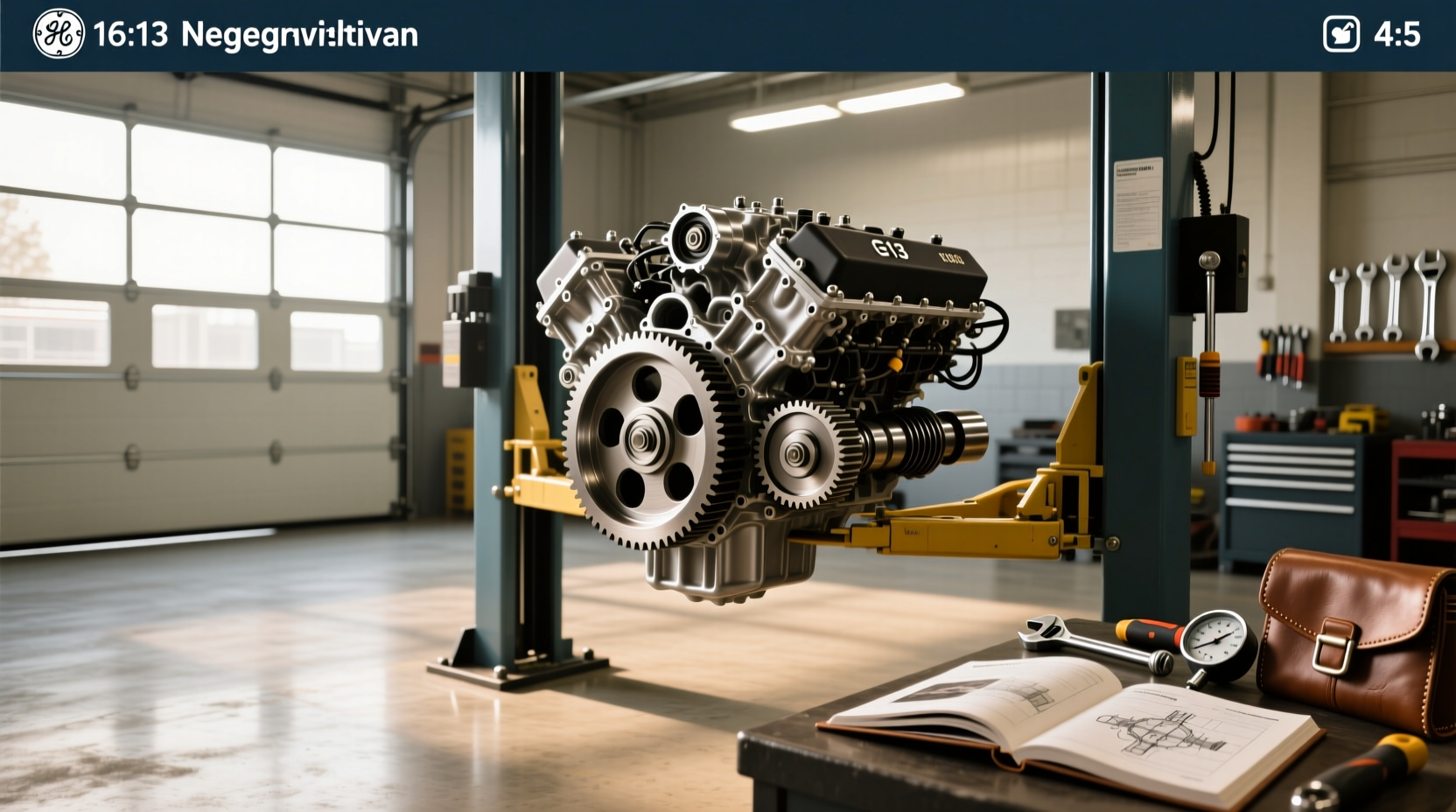
Properly setting the GE13 engine timing marks is critical for maintaining optimal performance, fuel efficiency, and longevity in Nissan UD (now UD Trucks) commercial vehicles. Misaligned timing can lead to hard starting, excessive smoke, power loss, or even catastrophic internal damage. This comprehensive guide walks you through everything you need to know about locating, verifying, and adjusting the timing marks on a Nissan Diesel GE13 Euro 3 engine—commonly found in Big Thumb trucks from the late 1990s to early 2010s. Whether you're rebuilding a used GE13 engine assembly or performing routine maintenance, understanding the correct procedure ensures reliable operation and avoids costly repairs down the line.
Understanding the GE13 Engine and Its Importance
The Nissan Diesel GE13 engine was first introduced in 1998 as part of UD Trucks’ heavy-duty lineup, primarily powering the Big Thumb series 🚚. It marked a significant engineering advancement by being the first diesel engine globally to feature a ball-bearing turbocharger, improving throttle response and mechanical efficiency 1. The GE13 is a 13-liter inline-six, direct-injection diesel engine producing between 280 and 380 horsepower depending on configuration and emissions standard (Euro 2 or Euro 3).
Because it's a mechanically controlled fuel injection system (not common rail), precise camshaft and crankshaft alignment during timing belt or gear replacement is essential. Unlike modern electronically managed engines that self-adjust, the GE13 relies entirely on physical timing marks to synchronize the valve train and fuel pump operation.
Why Accurate Timing Marks Matter
⚙️ Incorrect timing affects three core systems:
- Fuel Injection Timing: If the injection pump is out of phase, fuel may be delivered too early (causing knocking) or too late (resulting in incomplete combustion and white smoke).
- Valve Timing: Misalignment between camshaft and crankshaft can cause valves to open when pistons are near top dead center (TDC), potentially leading to bent valves or piston-to-valve contact. \li> Synchronization of Components: The distributor-type injection pump must rotate in exact coordination with the crankshaft and camshaft.
Even a single tooth off on the timing gears can result in poor running conditions or engine failure. That’s why mechanics emphasize double-checking all GE13 engine timing marks before startup after any disassembly involving the front cover, water pump, or injection pump drive.
Locating the GE13 Engine Timing Marks
📍 The GE13 uses multiple timing reference points across different components. These are typically stamped or laser-etched into metal surfaces and visible once covers are removed. Here’s where to find each one:
1. Crankshaft Pulley / Vibration Damper Mark
This is your primary reference point for Top Dead Center (TDC). On the front of the crankshaft pulley, there should be a notch or groove aligned with a stationary pointer attached to the engine block or front housing. When cylinder #1 is at TDC on the compression stroke, this mark lines up precisely.
🔧 Tip: Rotate the engine slowly using a socket on the crankshaft bolt while watching the rocker arms. When both intake and exhaust valves for cylinder #1 are closed and the piston rises, you’re approaching TDC on compression—not overlap.
2. Camshaft Gear Timing Mark
The camshaft gear has a protruding dowel pin or engraved dot that must align with a corresponding notch or pointer on the engine block or adjacent gear housing. On some models, this appears as two holes that line up when properly timed, allowing a special alignment pin to be inserted.
📌 Note: Some rebuild kits include updated timing gears with clearer markings. Always verify alignment visually and mechanically, not just by paint marks, which can wear or be incorrectly reapplied.
3. Injection Pump Timing Mark
The most sensitive component is the rotary distributor injection pump (typically a Bosch or Zexel model). This pump has its own timing indicator—often a small hole, slot, or engraved line on the pump body or drive flange—that must align with a fixed mark on the mounting surface.
⚡ To set this accurately, many technicians use a timing light or static method involving removing the delivery valve holder and watching for fuel movement as the engine is turned over slowly. There is often a specified 'cut-off' position (e.g., 4–6° BTDC) defined in service manuals.
Step-by-Step Procedure: Setting GE13 Engine Timing
⏱️ Follow these steps carefully when replacing the timing belt, gears, or injection pump:
- Disconnect the battery and relieve fuel pressure if working near injectors.
- Remove the radiator and shroud if necessary to access the front timing cover.
- Rotate the engine clockwise until the crankshaft pulley mark aligns with TDC on the scale.
- Verify cylinder #1 is on compression stroke using a compression gauge or by checking valve movement.
- Inspect camshaft gear alignment—ensure the timing dowel or mark matches the housing pointer.
- Align the injection pump by rotating its drive shaft until the internal rotor is at the firing position for cylinder #1.
- Use a static timing tool or follow OEM specs to confirm fuel cut-off timing; sometimes requires loosening the pump coupling and adjusting slightly.
- Recheck all marks after tightening components, as slight movement can occur.
- Prime the fuel system and bleed air before attempting to start.
- Start the engine and monitor performance—listen for knocking, check smoke levels, and scan for fault codes if equipped with diagnostics like Jaltest 2.
| Component | Timing Reference Type | Alignment Method | Common Issues |
|---|---|---|---|
| Crankshaft | Pulley notch + pointer | Visual alignment at TDC | Worn damper, misread scale |
| Camshaft | Dowel pin / engraved dot | Line up with housing mark | Incorrect reassembly, worn gears |
| Injection Pump | Slot or hole on flange | Static test or dynamic timing | Air in system, wrong angle |
Common Mistakes When Setting GE13 Timing Marks
❗ Even experienced mechanics make errors when servicing older diesel engines like the GE13. Here are frequent pitfalls:
- Assuming TDC based only on the crank pulley: Without confirming the compression stroke, you might time the engine on exhaust instead, throwing off synchronization.
- Relying on paint marks: Repairs shops often repaint timing indicators, but these can be inaccurate. Always cross-reference with mechanical features like dowels or holes.
- Not securing the injection pump correctly: Slight rotation during installation changes timing drastically. Use manufacturer-recommended torque specs and locking tabs.
- Skipping fuel priming: An unprimed fuel system leads to no-start conditions, prompting unnecessary disassembly.
- Ignoring diagnostic feedback: Modern diagnostic tools (like Jaltest or Delphi DS150E) can detect injection timing deviations even if mechanical marks appear correct.
Tools Needed for Proper Timing Setup
🧰 You’ll need more than just wrenches to get this right:
- Socket set and breaker bar (for turning crankshaft)
- Timing light (optional, for dynamic verification)
- Static timing gauge or feeler gauge (for injection pump setup)
- Service manual specific to your GE13 variant (e.g., GE13-TB, GEQ13)
- Alignment pins (if available for cam and pump)
- Fuel bleeding kit or hand primer
- Torque wrench (critical for reassembly)
📘 While factory service manuals are ideal, some third-party resources such as those from FridayParts or Japanese Engine Parts suppliers offer exploded diagrams and torque specs 3. However, always validate against OEM documentation when possible.
Variants and Regional Differences
🌍 The GE13 engine was sold under various names depending on region:
- In Japan and Asia: Often labeled “Nissan Diesel” GE13
- In North America: Found in Sterling Trucks (Acquired by Freightliner, then discontinued)
- In Europe: Marketed under UD Trucks with Euro 3 compliance
While the core architecture remains consistent, minor variations exist in emission controls, fuel pump calibration, and accessory drives. For example, Euro 3 versions may have modified EGR routing or different injector nozzles affecting idle quality post-timing adjustment.
✅ Always identify your exact engine serial number and consult regional service bulletins before beginning work. A mismatched pump calibration could void warranty or trigger diagnostic faults even with perfect mechanical timing.
When to Seek Professional Help
👥 Although setting timing marks seems straightforward, consider professional assistance if:
- You lack experience with distributor-type injection pumps.
- The engine suffered hydraulic lock or bent valves previously.
- You don’t have access to a verified service manual.
- Your truck shows persistent smoke or rough idle after attempted repair.
Reputable diesel rebuild shops specializing in UD or Nissan Diesel engines can perform dynamic timing analysis using oscilloscopes or electronic testers, ensuring precision beyond visual alignment.
Maintenance Tips After Timing Adjustment
✨ Once timing is confirmed and the engine runs smoothly:
- Monitor oil and coolant levels closely for the first few hours—internal damage may not show immediately.
- Check for unusual noises, especially metallic tapping (indicative of advanced injection timing).
- Record the date and mileage of the timing service for future reference.
- Replace related components like tensioners, idlers, and water pump if they were accessed during disassembly.
- Update diagnostic systems if applicable—some fleets require recalibration after major engine work.
Conclusion
Setting the GE13 engine timing marks correctly is not optional—it’s fundamental to safe and efficient operation. With clear procedures, the right tools, and attention to detail, you can ensure accurate synchronization of the crankshaft, camshaft, and injection pump. Remember: never assume markings are correct, always verify TDC mechanically, and double-check fuel pump alignment using recommended methods. By following this guide, you reduce the risk of downtime, expensive damage, and recurring drivability issues in your UD Big Thumb or compatible truck.
Frequently Asked Questions
- ❓ How do I know if my GE13 engine timing is off?
- Signs include difficulty starting, excessive white or black smoke, loss of power, knocking sounds, or increased fuel consumption. A diagnostic scan may reveal injection-related fault codes.
- ❓ Can I set GE13 timing without a service manual?
- It’s strongly discouraged. Without factory specifications, you risk incorrect alignment. Used manuals are available online, and some parts suppliers provide basic guides, but OEM data is safest.
- ❓ What happens if the injection pump timing is incorrect?
- Incorrect pump timing can cause pre-ignition (engine knock), high NOx emissions, poor fuel economy, or incomplete combustion leading to carbon buildup and injector coking.
- ❓ Are there alignment tools for the GE13 engine?
- Yes, specialized timing pins and holding tools exist for the camshaft and injection pump. They are often included in OEM repair kits or available through diesel specialty suppliers.
- ❓ Is the GE13 engine still supported today?
- Yes, UD Trucks continues to support legacy models, and many aftermarket suppliers offer rebuilt GE13 engine assemblies and replacement parts globally.





 浙公网安备
33010002000092号
浙公网安备
33010002000092号 浙B2-20120091-4