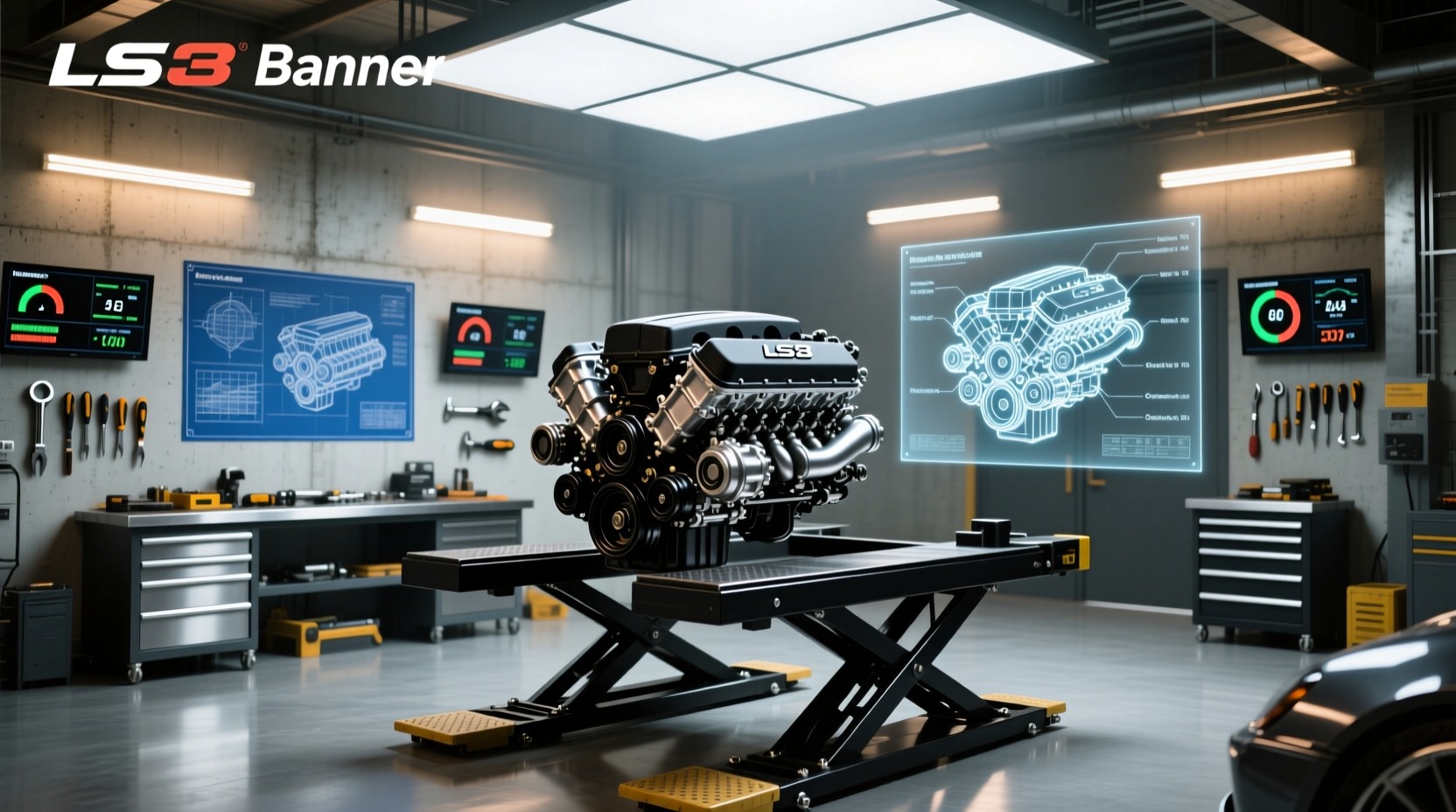
When searching for a reliable, high-performance V8 engine for a muscle car build or LS swap, the GM LS3 engine consistently ranks among the top choices. Known for its robust architecture, factory-ready power, and broad aftermarket support, the LS3 6.2L V8 delivers a compelling mix of performance and practicality. With a factory-rated output of up to 430 horsepower and 424 lb-ft of torque, aluminum block construction, and compatibility across generations of GM vehicles, the LS3 engine specs make it a favorite for restomods, hot rods, and crate engine upgrades1. This guide breaks down every critical specification, compares common variants, and answers the most frequently asked questions about reliability, tuning potential, and vehicle fitment.
What Is the LS3 Engine?
The LS3 is a Gen IV small-block V8 engine developed by General Motors as part of its LS-based engine family. Introduced in 2007, it replaced the LS2 and became the standard high-output engine in several GM performance models. Unlike earlier LS engines that used iron blocks, the LS3 features an all-aluminum design, contributing to weight savings without sacrificing durability. It's often categorized as a 'crate engine' due to its popularity in replacement and custom builds, where users source complete long blocks or turn-key packages from Chevrolet Performance or third-party suppliers2.
⚙️ Key characteristics include:
- Displacement: 6.2 liters (376 cubic inches)
- Configuration: 90° V8 with overhead valves (OHV)
- Block material: Aluminum
- Cylinder heads: L92-style with larger intake ports and 2.165-inch intake valves
- Fuel system: Sequential multi-port fuel injection (SMPFI)
- Valvetrain: Hydraulic roller lifters with stamped rocker arms
This combination results in strong low-end torque and excellent airflow efficiency—two traits highly valued in both street and track applications.
Detailed LS3 Engine Specifications
To fully understand what sets the LS3 apart, let’s examine its core technical specifications in detail.
| Specification | Value / Detail |
|---|---|
| Engine Family | GM LS Series (Gen IV) |
| Displacement | 6.2L (376 cu in) |
| Bore × Stroke | 4.065 in × 3.622 in (103.25 mm × 92 mm) |
| Block Material | Aluminum |
| Head Material | Aluminum |
| Compression Ratio | 10.7:1 |
| Valvetrain | OHV, 2 valves per cylinder, hydraulic roller lifters |
| Camshaft Type | Hydraulic roller (factory profile varies by application) |
| Maximum Horsepower | 430 hp @ 5900 rpm (stock, non-supercharged) |
| Peak Torque | 424 lb-ft @ 4600 rpm |
| Fuel Delivery | Sequential Multi-Port Fuel Injection |
| Ignition System | Coil-near-plug (COP) |
| Redline | 6500 rpm |
| Weight (dry) | ~415 lbs (with accessories ~470 lbs) |
| OEM Applications | Corvette, Camaro, G8 GT, SSR, Escalade (certain years) |
Which Vehicles Came with an LS3 Engine?
The LS3 was first introduced in the 2008 Chevrolet Corvette (base model) and continued through the 2013 model year. It also powered several other GM performance and luxury vehicles during this period:
- 2008–2013 Chevrolet Corvette – Base C6 generation
- 2009–2015 Chevrolet Camaro SS – Fifth-generation (5.7L LS1/LS2 were used in earlier concepts; LS3 launched with production SS)
- 2008–2009 Pontiac G8 GT – Australian-sourced full-size sedan
- 2007–2013 Cadillac CTS-V (first-gen only) – Early versions used supercharged LSA, but some trims shared LS architecture
- 2007–2014 Chevrolet SSR – Retractable pickup truck
- Certain GMC Sierra & Chevrolet Silverado police/call-out editions
📌 Note: While many trucks list a 6.2L V8, not all are true LS3 engines. The L9H, L9K, and LMG variants found in trucks share bore/stroke dimensions but differ in tuning, manifolds, and control systems. True LS3s are typically identified by their rectangular port heads and specific VIN codes.
How Does the LS3 Compare to Other LS Engines?
Understanding how the LS3 stacks up against related engines helps buyers assess value, upgrade paths, and compatibility.
LS3 vs LS2
The LS2 (6.0L) preceded the LS3 and was used in Corvettes and SSRs from 2005–2007. While both have aluminum blocks, the LS3 offers:
- Larger displacement (6.2L vs 6.0L)
- Better-flowing cylinder heads (from the L92 truck engine)
- Higher factory horsepower (430 vs 400 hp)
- Improved intake manifold design
In practical terms, the LS3 provides more usable mid-range torque and responds better to modifications like cold air intakes, exhaust upgrades, or forced induction.
LS3 vs LS7
The LS7 is a higher-end, race-focused 7.0L engine used in the Z06 Corvette. Key differences:
- LS7 has larger displacement (427 cu in vs 376 cu in)
- Dry sump oiling system (LS3 uses wet sump)
- Titanium connecting rods and intake valves
- Nearly 500 hp stock (vs 430 hp)
- Higher cost and lower availability
✅ Verdict: The LS3 wins on affordability and ease of installation. The LS7 excels in extreme performance scenarios but requires more maintenance and tuning expertise.
LS3 vs LS1
The LS1 (introduced in 1997) was the first modern LS engine. Though durable, it lacks key advancements:
- Smaller 5.7L displacement
- Older cathedral-port heads with less airflow
- Iron block option (heavier than LS3)
- Lower peak power (~350 hp stock)
For swaps, the LS3 is generally preferred due to superior breathing, factory power, and simpler integration with modern electronics.
Performance Potential and Tuning Options
One reason the LS3 remains popular is its impressive headroom for modification. Even in stock form, it outperforms many classic big-block engines. But with simple bolt-ons, gains of 100+ horsepower are achievable.
Stage 1 Modifications (Bolt-Ons)
- Cold Air Intake: +10–15 hp
- Long-Tube Headers: +20–25 hp
- High-Flow Exhaust (cat-back): +10–15 hp
- Performance Throttle Body: +10 hp
- Tune (custom ECU calibration): +20–30 hp
Total estimated gain: 70–100 hp over stock.
Stage 2 Upgrades (Internal Enhancements)
- Performance camshaft (e.g., 220° duration at 0.050” lift)
- Upgraded valve springs and retainers
- Lightweight pistons or forged internals (for boost)
- Ported cylinder heads
With these changes, naturally aspirated outputs can reach 500–550 hp depending on compression and airflow optimization.
Forced Induction (Supercharging/Turbocharging)
The LS3 responds exceptionally well to forced induction. Common setups include:
- Centrifugal supercharger (e.g., ProCharger D1): 600–700 hp on pump gas
- Screw-type blower (e.g., Whipple): 700–800 hp with intercooling
- Twin-turbo systems: 800+ hp with proper fueling and cooling
⚠️ Important: When adding forced induction, upgrade the following:
- Fuel system (injectors, pump, regulator)
- Intercooler and piping
- Transmission and drivetrain components
- ECU tuning (preferably standalone like Holley Terminator X or HP Tuners)
Common LS3 Variants and Crate Engine Options
GM and aftermarket companies offer multiple versions of the LS3, tailored for different use cases.
Factory OEM LS3
Found in original vehicles, these engines come with variable valve timing (VVT) and Active Fuel Management (AFM), which shuts off cylinders under light load to save fuel. Some enthusiasts disable AFM via tuning due to reliability concerns with lifter wear.
Chevrolet Performance LS3 Crate Engines
These are new, fully assembled engines sold directly by GM. Popular models include:
- LS3 430HP Base Crate Engine: Matches factory output, ideal for replacements
- LS376/480: 480 hp version with improved cam and tuning
- LS376/525: 525 hp variant with aggressive cam and high-flow accessories
🛒 These are widely available through authorized dealers and performance parts distributors. Prices typically range from $6,500 to $11,000 depending on configuration.
Aftermarket Turn-Key Packages
Companies like Texas Speed & Performance, ATK Engines, and Smeding Performance sell pre-built LS3 packages rated from 500 to over 600 hp. These often include:
- Forged internals
- Custom camshafts
- High-rise intakes
- Full wiring harnesses and ECUs
While more expensive ($12,000–$20,000+), they reduce setup time and ensure compatibility.
Reliability and Known Issues
The LS3 is widely regarded as one of the most reliable modern V8s. However, no engine is immune to issues.
Active Fuel Management (AFM) Problems
Engines equipped with AFM (mainly L99 variant in G8 GT and Camaro SS) may experience lifter failure due to oil pressure fluctuations when cylinders deactivate. Symptoms include ticking noises and misfires.
✅ Solution: Disable AFM via ECU tune or install upgraded lifters (e.g., Comp Cams hydraulic rollers).Timing Chain Wear (Early Models)
Rare cases of premature chain stretch have been reported, usually linked to poor maintenance or high-RPM abuse. Most later models resolved this with updated tensioners.
✅ Maintenance Tip: Inspect timing components every 100,000 miles if used in high-stress environments.Water Pump Failure
The plastic impeller used in some factory units can degrade over time, especially with overheating or mixed coolant types.
✅ Prevention: Replace with a metal-impeller aftermarket unit during rebuilds.Is the LS3 Right for Your Project?
Consider the LS3 if you need:
- A balance of power and daily drivability
- Proven reliability with minimal maintenance
- Strong aftermarket support
- Compatibility with older or custom chassis (via LS swap kits)
❌ Avoid if:
- You require maximum displacement (consider LS7 or big-block)
- You’re on a tight budget (used LS1 may be cheaper)
- You want factory fuel economy (AFM-equipped models help, but still thirsty)
Where to Buy an LS3 Engine
You can source LS3 engines through several channels:
New Crate Engines
From Chevrolet Performance or authorized resellers. Advantages:
- Warranty coverage (typically 2-year limited)
- Consistent quality and documentation
- Support for emissions-compliant installations
Used OEM Engines
Pulled from salvage yards or private sellers. Pros:
- Lower cost ($3,000–$5,000)
- Real-world mileage history (if documented)
Rebuilt or Remanufactured Units
Restored to like-new condition by specialty shops. Look for:
- Updated components (e.g., non-AFM lifters)
- Performance upgrades (optional)
- Clear warranty terms
Conclusion: Why the LS3 Still Dominates
The LS3 engine remains a benchmark in the performance V8 world. Its blend of displacement, factory tuning, lightweight construction, and modularity makes it ideal for everything from resto-mods to full-on race machines. Whether you're researching LS3 engine specs for a swap, comparing it to other LS variants, or evaluating crate engine options, understanding its capabilities and limitations is essential. With proper maintenance and smart upgrades, the LS3 can reliably deliver over 500 hp—and much more with forced induction. As long as GM continues supporting the platform and the aftermarket evolves, the LS3 will remain a go-to choice for American performance enthusiasts.
Frequently Asked Questions
- ❓ What is the difference between an LS3 and a 6.2L V8?
- The LS3 is a specific model within GM's family of 6.2L V8 engines. Not all 6.2L engines are LS3s—some, like those in trucks, use different heads, tuning, or block designs. The true LS3 is defined by its 376 cubic inch displacement, rectangular port heads, and Gen IV architecture.
- ❓ How much horsepower can a stock LS3 handle?
- A stock LS3 block can safely handle up to 600–650 horsepower in naturally aspirated form. With forged internals and proper tuning, it can support 800+ hp in boosted applications.
- ❓ Can I swap an LS3 into a classic car?
- Yes, LS3 swaps are common in classics like Chevelles, Mustangs, and Broncos. You'll need motor mounts, a compatible transmission, wiring harness, and ECU. Kits are available from companies like Holley, Painless, and Year One.
- ❓ Does the LS3 have timing chain issues?
- Some early models had minor timing chain wear, but it's not widespread. Regular oil changes and avoiding sustained high RPMs minimize risk. Later production runs improved tensioner design.
- ❓ Is the LS3 better than the LS1?
- In nearly every way—more displacement, better flowing heads, higher factory output, and improved electronics. The LS3 is the logical evolution of the LS1 platform and is generally preferred for modern builds.





 浙公网安备
33010002000092号
浙公网安备
33010002000092号 浙B2-20120091-4