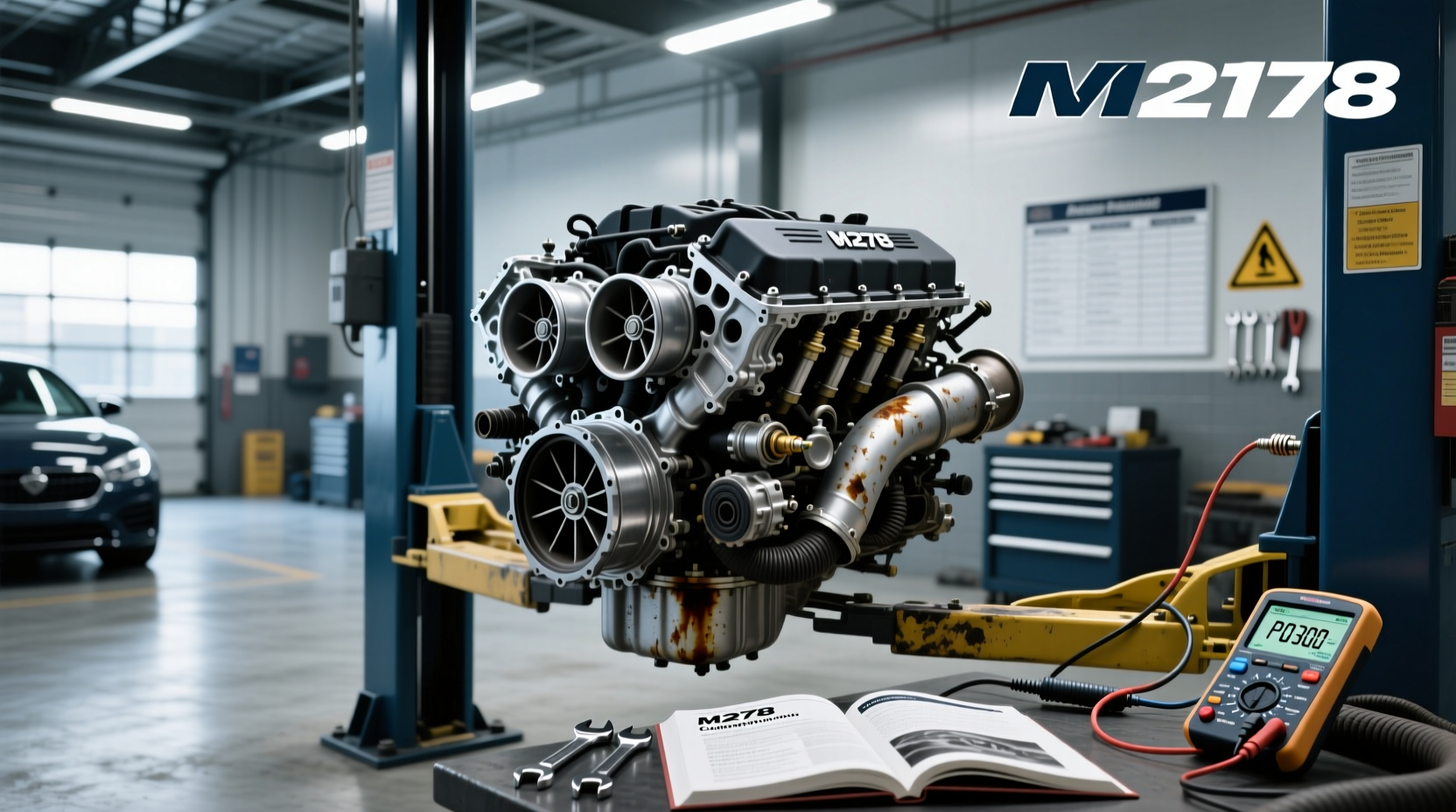
The Mercedes-Benz M278 4.7L twin-turbo V8 engine is known for its smooth performance and strong power delivery, but owners often search for answers when facing recurring mechanical issues. Common M278 engine problems include timing chain tensioner failure, front crankshaft seal leaks, plastic coolant line degradation, turbocharger wastegate rattle, and camshaft adjuster noise on cold start 1. While many of these issues can be managed with proactive maintenance, understanding their root causes and long-term implications is essential for anyone owning or considering a vehicle equipped with this powertrain.
Understanding the M278 Engine: Design and Applications
Introduced in 2010, the M278 replaced the naturally aspirated M273 V8 as Mercedes-Benz’s flagship luxury sedan and SUV engine. It features a 4.663 cc (4.7L) displacement, twin turbochargers, direct fuel injection, and an aluminum block with Silitec-lined cylinders for reduced friction 1. This engine was used across multiple platforms including the S550 (W221/W222), E550 (W212), CLS550 (C218), GL450 (X166), and SL550 (R231). Despite its advanced engineering, real-world reliability has been mixed due to specific design flaws that tend to surface beyond 60,000 miles.
The M278 delivers between 402–429 horsepower depending on model year and tuning, offering a balance of refinement and responsiveness. However, its complexity—especially the integration of turbocharging into a previously atmospheric engine architecture—introduced new stress points. These include increased heat loads, higher oil pressure demands, and reliance on plastic components in high-temperature zones, all contributing to long-term durability concerns.
Top M278 Engine Problems by Component
🔧 Timing Chain System and Front Cover Leaks
One of the most widespread issues with the M278 engine involves the timing chain system and associated front engine cover. Unlike traditional metal covers, the M278 uses a composite plastic front cover that houses the timing chains, guides, and tensioners. Over time, exposure to heat and oil leads to warping and cracking, resulting in oil seepage or full-blown leaks from the front of the engine.
More critically, the upper timing chain tensioners are prone to failure. When they degrade, slack develops in the timing chain, which can lead to misalignment between camshafts and crankshaft. In severe cases, this results in valve-to-piston contact and catastrophic engine damage. Symptoms include:
- Whining or rattling noise during cold startup
- Check engine light with codes related to camshaft timing (P0016, P0017)
- Oil pooling at the base of the timing cover
While Mercedes issued technical service bulletins addressing early versions of this problem, there is no permanent factory fix. Many independent specialists recommend replacing the entire front cover assembly with an updated metal-reinforced version when performing timing work—a costly but preventive measure.
⚙️ Camshaft Adjusters and Phaser Rattle
Closely tied to the timing system are the camshaft adjusters (also called phasers), which control variable valve timing. On cold starts, especially after the engine has sat overnight, owners frequently report a loud metallic rattle lasting 1–3 seconds. This is typically caused by worn internal vanes or collapsed oil chambers within the adjuster units.
Although some rattle is considered normal in low temperatures, persistent or worsening noise indicates wear. If left unaddressed, failed adjusters can cause poor idle quality, reduced fuel economy, and emissions test failures. Replacement requires partial disassembly of the cylinder heads and is labor-intensive, often costing $2,000–$3,500 for both banks.
🛒 Plastic Coolant and Oil Lines Degradation
A significant design flaw in the M278 lies in its use of plastic hoses for critical fluid systems. The engine employs plastic coolant lines connecting the turbochargers to the cooling circuit, as well as plastic oil return lines from the turbos back to the sump. These materials become brittle over time due to constant thermal cycling.
When these lines crack or detach, coolant can leak into the engine bay or mix with oil, leading to overheating or lubrication breakdown. Similarly, broken oil return lines cause oil starvation to the turbo bearings, accelerating turbo failure. There are documented cases where sudden loss of boost pressure or white smoke from the exhaust traced back to ruptured plastic connectors.
Preventive replacement with reinforced silicone or metal-braided lines is strongly advised around 80,000–100,000 miles, even if no symptoms are present. This upgrade significantly improves long-term reliability and reduces roadside breakdown risk.
⚡ Turbocharger Wastegate and Actuator Issues
The twin Honeywell turbochargers on the M278 are generally robust, but the wastegate actuators—a mechanical component regulating boost pressure—are vulnerable. Owners commonly report a tapping or clicking sound coming from the turbo housing during deceleration or idle. This stems from worn linkages or failing vacuum diaphragms inside the actuator.
Over time, a sticking wastegate can cause over-boosting (risking detonation) or under-boosting (reducing power). Diagnosing this issue requires scanning for boost pressure deviations and physically inspecting actuator movement. Some tuners offer upgraded solid-linkage kits to replace the fragile OEM plastic arms.
🧰 Oil Pump and Low Oil Pressure Concerns
Another serious concern affecting high-mileage M278 engines is declining oil pressure. This can stem from several sources: a failing oil pump, clogged pickup screen, or excessive bearing clearances due to wear. Some models have exhibited premature oil pump drive shaft failure, particularly those subjected to aggressive driving or extended oil change intervals.
Symptoms include:
- Low oil pressure warning light at idle
- Noisy lifters or ticking from the valvetrain
- Increased consumption or darkened oil
Because the oil pump is located deep within the engine block, access requires major disassembly. As such, it's often addressed only when other major work (like timing chain replacement) is already underway. Using high-quality full-synthetic oil and adhering to 7,500-mile service intervals helps mitigate wear.
🌡️ Cooling System Vulnerabilities
The M278 operates at elevated temperatures due to turbocharging, placing extra strain on the cooling system. Common weak points include:
- Radiator cracks or internal leaks
- Failing electric water pumps
- Thermostat housing degradation
- Expansion tank cap seal failure
A compromised cooling system can lead to localized hot spots, head gasket issues, or warped cylinder heads—especially if the vehicle is driven hard before reaching operating temperature. Regular inspection of coolant condition and pressure testing the system every two years is recommended.
Are M278 Engines Reliable Long-Term?
The reliability of the M278 engine depends heavily on maintenance history and driving conditions. Well-maintained examples with regular fluid changes and timely intervention on known weaknesses can exceed 150,000 miles without major repairs. However, neglected vehicles—particularly those with deferred oil changes or ignored warning signs—often suffer expensive failures between 70,000 and 100,000 miles.
Reddit discussions and owner forums reflect this split: some users praise the engine’s longevity, while others recount six-figure repair bills 2. The difference usually comes down to whether preventive maintenance was performed proactively rather than reactively.
It's also worth noting that a class action lawsuit was filed against Mercedes-Benz alleging that the company concealed a defect in M278 engines leading to premature failure due to inadequate oil supply design 3. While the case did not result in a formal recall, it underscores ongoing concerns among consumers.
Which Cars Have the M278 Engine?
The M278 engine was widely deployed across Mercedes-Benz’s lineup from 2010 to 2017. Key applications include:
| Model | Chassis Code | Years | Power Output |
|---|---|---|---|
| S550 | W221, W222 | 2010–2017 | 429 hp |
| E550 | W212, W213 | 2010–2016 | 402 hp |
| CLS550 | C218 | 2011–2018 | 402 hp |
| ML550 / GL450 | W166, X166 | 2012–2015 | 429 hp |
| SL550 | R231 | 2012–2018 | 429 hp |
| G550 | W463 | 2013–2018 | 422 hp |
If you're considering purchasing a used Mercedes with this engine, obtaining a complete service record and conducting a thorough pre-purchase inspection are crucial. Look specifically for evidence of timing chain work, coolant line replacements, and oil pressure tests.
How to Maintain an M278 Engine for Maximum Longevity
To avoid costly repairs and extend the life of your M278 engine, follow these best practices:
- Change oil every 7,500 miles using OEM-spec full synthetic (250.29 or 250.51 approval).
- Inspect coolant lines annually, especially near turbos and cylinder heads.
- Replace plastic connectors with metal or reinforced silicone equivalents preemptively.
- Monitor oil pressure via OBD2 scanner during warm idle; values below 1 bar indicate concern.
- Address cold-start rattle promptly—don’t assume it’s “normal.”
- Use OEM or high-grade aftermarket parts when repairs are needed; cheap alternatives often fail faster.
Additionally, avoid short trips and allow the engine to fully warm up before aggressive driving. This ensures proper oil circulation and reduces condensation buildup in the crankcase.
Common Misconceptions About M278 Problems
Several myths persist about the M278 engine that can mislead buyers and owners:
- "All M278 engines will blow up" – False. Many run reliably past 150k miles with proper care.
- "Turbo failure is inevitable" – Not true. Turbos themselves are durable; failures usually stem from oil or coolant line issues.
- "Dealers won’t acknowledge the problems" – While there was no official recall, dealerships are familiar with common fixes and may offer goodwill repairs.
- "ECU remapping causes engine damage" – Properly tuned software doesn’t harm internals, though it increases thermal load and should be paired with enhanced cooling.
Conclusion: Weighing the Pros and Cons of Owning an M278-Powered Vehicle
The M278 engine offers impressive performance and refinement, making it a compelling choice in the luxury segment. However, its reputation for certain mechanical vulnerabilities means ownership comes with responsibilities. Potential buyers should factor in the likelihood of $3,000–$7,000 in preventative maintenance over the first 100,000 miles.
If you already own one, staying ahead of known issues through disciplined maintenance is key. For prospective buyers, a pre-purchase inspection focusing on timing components, oil pressure, and coolant integrity can save thousands down the road.
Frequently Asked Questions (FAQs)
❓ What cars have the M278 engine?
The M278 engine was used in the S550, E550, CLS550, ML550/GL450, SL550, and G550 models from 2010 to 2018.
❓ Is the M278 engine reliable?
It can be reliable with consistent maintenance, but it has known issues like timing cover leaks and cam adjuster rattle that require attention, especially after 70,000 miles.
❓ How much does it cost to fix M278 timing chain issues?
Repairs typically range from $4,000 to $7,000 due to extensive labor required to access internal components.
❓ Can I drive my car if the M278 has a timing chain rattle?
Short-term driving may be possible, but continued operation risks catastrophic engine damage. Inspection and repair are strongly advised.
❓ Are there upgraded parts available for the M278 engine?
Yes, aftermarket solutions include metal-reinforced timing covers, solid wastegate linkages, and silicone coolant lines to improve durability.





 浙公网安备
33010002000092号
浙公网安备
33010002000092号 浙B2-20120091-4