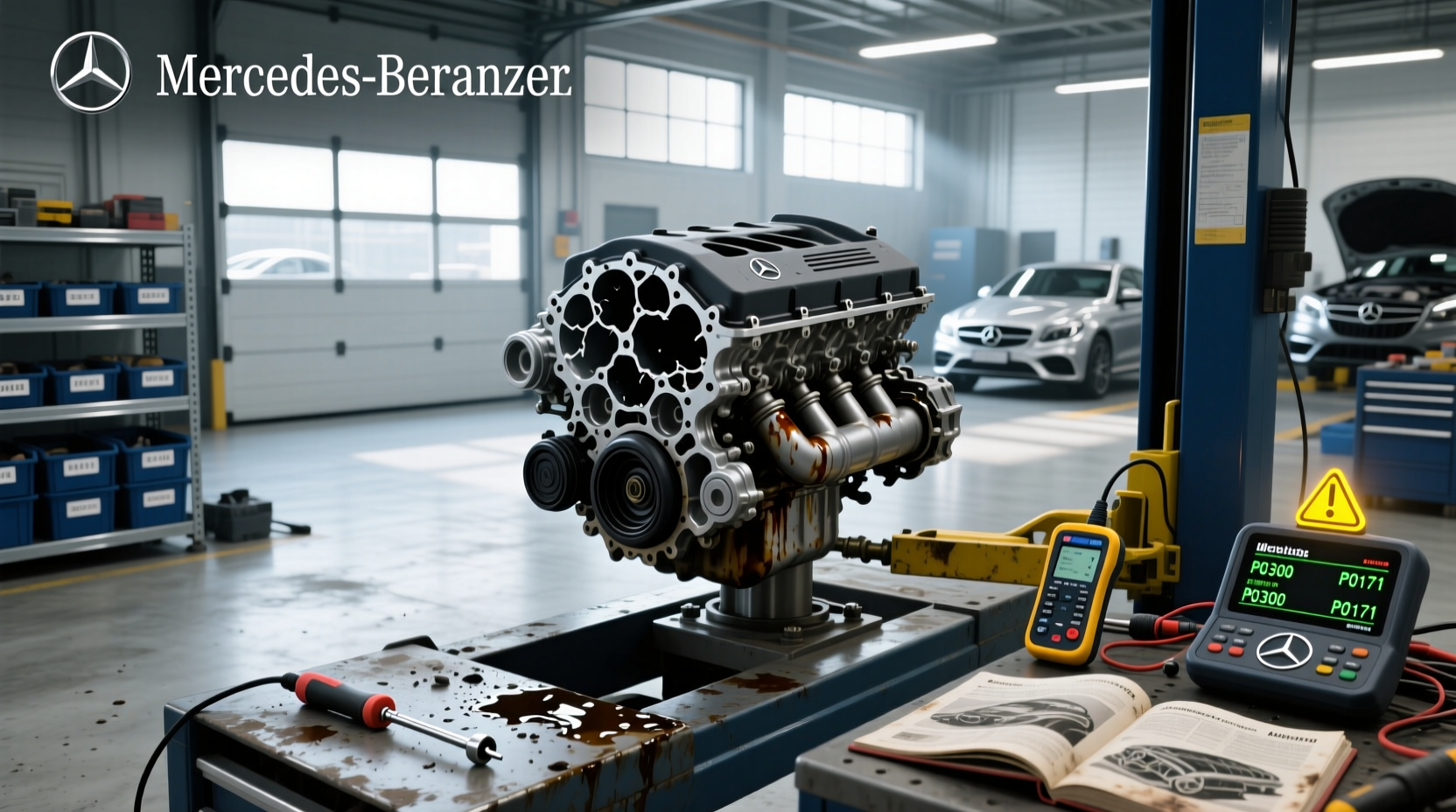
If you own a Mercedes-Benz equipped with the M272 V6 engine, understanding its common M272 engine problems is essential for long-term reliability. Introduced in 2004 and used through 2017 across multiple models including the E350, C300, and CLK350, the M272 3.5L V6 was designed to deliver smooth performance and solid fuel efficiency. However, over time, certain mechanical weaknesses have emerged—some costly if not addressed early. The most frequently reported issues include balance shaft gear wear, intake manifold flap failures, persistent oil leaks, cooling system malfunctions, and timing chain tensioner degradation. This guide breaks down each problem, explains root causes, symptoms, repair costs, and preventive strategies so owners can make informed decisions about maintenance, repairs, or purchasing a used vehicle with this engine.
Overview of the Mercedes-Benz M272 Engine
The M272 is a naturally aspirated 90° V6 gasoline engine produced by Mercedes-Benz from 2004 to 2017 1. It replaced the earlier M112 V6 and served as the primary six-cylinder powerplant before being phased out in favor of the more advanced M276. Available in displacements of 2.5L, 3.0L, and 3.5L, the engine features an aluminum block with silicon/aluminum-lined cylinders, dual overhead camshafts (DOHC), and variable valve timing on both intake and exhaust camshafts—an improvement over previous designs.
Despite its refined engineering and strong initial reputation, the M272 has developed a mixed track record due to specific design flaws that tend to surface after 80,000–120,000 miles. While many examples remain reliable with proper care, others suffer from expensive failures tied to plastic components, inadequate lubrication paths, and thermal stress points. Knowing which variants are more prone to issues—and what signs to watch for—can help avoid major repair bills.
Common M272 Engine Problems: A Detailed Breakdown
1. Balance Shaft Gear Failure ⚙️
One of the most serious and well-documented M272 3.5 engine problems involves the balance shaft assembly. Located at the front of the engine, the balance shaft reduces vibration for smoother operation. In early versions of the M272 (particularly pre-2008), the gears driving this shaft were made from nylon-coated steel. Over time, heat and oil degradation cause the nylon coating to delaminate, leading to gear tooth breakage.
Symptoms:
- Loud knocking or grinding noise from the front of the engine
- Check engine light with P05B3 or similar OBD-II codes
- Oil contamination with metal shavings
- Potential engine seizure if debris enters oil pump
Repair Complexity: High. Replacing the balance shaft requires removing the timing chain cover, often involving replacement of the water pump, thermostat housing, and seals. Labor alone can exceed 15 hours. Some owners opt for upgraded aftermarket steel gears to prevent recurrence.
Prevention Tip: Change engine oil every 5,000–7,500 miles using OEM-specified low-ash motor oil (such as MB 229.5). Clean oil helps reduce thermal breakdown of plastic components.
2. Intake Manifold Flap Actuator Issues 🔧
The M272 uses a variable-length intake manifold system to optimize torque across the RPM range. Small flaps inside the intake runners open and close via vacuum actuators and plastic linkage rods. These rods and actuators are known to crack or break after years of thermal cycling.
Symptoms:
- Rough idle or hesitation during acceleration
- Loss of low-end torque
- CEL (Check Engine Light) with codes like P2004, P2005, or P2015
- Vacuum leaks detectable with smoke testing
Repair Options:
Dealerships typically replace the entire intake manifold—a costly solution exceeding $2,000. However, many independent shops offer repair kits that replace only the broken plastic arms and actuators for under $200 in parts. Some enthusiasts even remove the flaps entirely and reprogram the ECU (engine control unit) to disable the system, though this may slightly affect throttle response.
DIY Feasibility: Moderate. Requires removal of upper intake plenum and careful disassembly. Best done with access to diagnostic tools to clear fault codes afterward.
3. Thermostat and Coolant System Failures 🌡️
The electric thermostat (also called a rotary thermostat) in the M272 is integrated into the coolant housing at the front of the engine. Unlike traditional thermostats, it’s electronically controlled by the ECU to allow precise temperature management. Unfortunately, the plastic housing is prone to cracking, and the thermostat motor can fail.
Symptoms:
- Overheating, especially under load or in traffic
- Coolant leaks near the timing cover
- Fluctuating temperature gauge readings
- Engine entering limp mode
Why It Matters: If coolant leaks onto the serpentine belt or electrical connectors, secondary damage can occur. Additionally, improper operating temperatures accelerate wear on other components like head gaskets.
Solution: Replace the thermostat and housing assembly as a unit. Use updated OEM or reinforced aftermarket versions made with higher-grade plastic or metal inserts. Always bleed the cooling system properly after replacement to avoid air pockets.
4. Oil Leaks from Valve Covers and Front Seal 🛠️
Oil leaks are among the most common complaints on high-mileage M272 engines. The primary sources include:
- Valve cover gaskets (both left and right banks)
- Front crankshaft seal (behind the harmonic balancer)
- Oil cooler lines and filter housing
- Camshaft adjuster seals
Valve Cover Gaskets: Made from rubber, these degrade over time due to heat exposure. Once cracked, they leak oil onto the exhaust manifolds, causing burning smells and potential fire hazards.
Front Crankshaft Seal: Often overlooked until significant leakage occurs. Diagnosis requires removing the drive belt and inspecting behind the harmonic balancer. Replacement involves special tools to pull and reinstall the balancer without damaging it.
Maintenance Advice: Address minor seeps early. Ignoring small leaks leads to sludge buildup, reduced oil levels, and eventual engine damage.
5. Timing Chain Tensioner and Guide Wear ⏱️
While the M272 doesn’t use a timing belt, it relies on a timing chain with hydraulic tensioners and plastic guides. As mileage increases, the tensioner piston can stick or lose pressure, and the plastic guides wear down or fracture.
Risks: If the chain becomes loose, it can jump teeth, resulting in bent valves or catastrophic interference damage. Unlike some engines, the M272 is an interference design—meaning piston-to-valve contact will destroy the engine if timing is lost.
Symptoms:
- Rattling noise at cold startup (often goes away after warm-up)
- Misfires or rough running
- Check engine light with camshaft position sensor codes
Recommended Action: Proactively replace the timing chain kit (chain, tensioners, guides, sprockets) between 100,000 and 150,000 miles, especially if oil changes have been irregular. Using high-quality OEM or OEM-equivalent parts is critical—cheap kits often fail prematurely.
Model Years and Variants: Which M272 Engines Are Most Reliable?
Not all M272 engines are created equal. There are notable differences between model years and displacement sizes:
| Displacement | Years Produced | Known Weaknesses | Reliability Notes |
|---|---|---|---|
| 2.5L (M272 DE25) | 2005–2010 | Limited power, rare in North America | Fewer reports of major issues; lower stress = potentially longer life |
| 3.0L (M272 DE30) | 2006–2012 | Balance shaft, thermostat, oil leaks | Most common version; follow maintenance strictly |
| 3.5L (M272 DE35) | 2004–2011 | Balance shaft gear failure (pre-2008), intake flaps | Higher risk of gear failure; post-2008 models improved |
In general, M272 engines built after 2008 show improvements in balance shaft materials and thermostat housing durability. When buying a used car, look for service records showing proactive replacements (e.g., timing chain, thermostat, valve cover gaskets).
How to Diagnose M272 Engine Problems Early
Catching issues before they become emergencies saves money and preserves engine longevity. Here’s how to monitor your M272:
- Use a Scan Tool Regularly: Devices like OBDeleven or BlueDriver can read manufacturer-specific codes beyond basic OBD-II, helping identify pending faults in the intake system, cam adjusters, or cooling controls.
- Inspect Under the Hood Monthly: Look for oil residue, coolant stains, or cracked hoses. Pay attention to the area around the thermostat housing and valve covers.
- Listen at Startup: A brief rattle that disappears quickly may indicate aging timing components. Persistent knocking warrants immediate inspection.
- Monitor Temperature Gauge: Any deviation from normal operating temperature should be investigated—even slight overheating can accelerate wear.
- Check Oil Condition: Dark, sludgy oil indicates poor maintenance. Always use Mercedes-approved 5W-40 or 0W-40 oils meeting MB 229.5 specification.
Should You Buy a Car with an M272 Engine?
The answer depends on condition, history, and budget. The M272 isn't inherently unreliable, but it demands disciplined ownership. Consider these guidelines:
✅ Buy If:- The seller provides full service records
- Major known-issue components have been replaced (timing chain, thermostat, valve covers)
- Mileage is under 100,000 and no active warning lights
- Price reflects potential future maintenance costs
- No maintenance history available
- Active check engine light or known oil/coolant leaks
- Vehicle has over 120,000 miles without timing chain service
- Sold “as-is” without warranty or inspection option
Used M272-equipped vehicles like the W211 E350 or W203 C350 can be excellent values—if properly maintained. But they’re not set-and-forget cars. Factor in $1,500–$3,000 in anticipated repairs when negotiating price.
Preventive Maintenance Checklist for M272 Owners
Follow this schedule to maximize reliability:
| Component | Interval | Action |
|---|---|---|
| Engine Oil & Filter | Every 5,000–7,500 mi | Use MB-approved synthetic oil |
| Coolant | Every 4 years / 60k mi | Replace with correct G48 type |
| Spark Plugs | Every 60,000 mi | NGK or Bosch OE-spec only |
| Timing Chain Kit | 100,000–150,000 mi | Proactive replacement recommended |
| Thermostat & Housing | 100,000 mi or if leaking | Upgrade to reinforced version |
| Valve Cover Gaskets | At first sign of leak | Replace with updated seals |
| Intake Manifold Flaps | When faulty or proactively | Repair kit or delete with tune |
Myths vs Facts About the M272 Engine
Several misconceptions circulate online. Let’s clarify:
- Myth: All M272 engines will blow up due to balance shaft failure.
Fact: Only early models (pre-2008) with original nylon gears are highly susceptible. Many engines exceed 150,000 miles without issue if maintained. - Myth: The M272 is worse than the older M112.
Fact: The M272 offers better fuel economy, smoother power delivery, and improved emissions. Its complexity introduces new failure points, but overall refinement is superior. - Myth: You must replace the entire intake manifold.
Fact: Repair kits exist and are widely used. Full replacement is dealer policy but not always necessary.
Conclusion: Managing M272 Engine Reliability
The Mercedes-Benz M272 engine delivers strong performance and refinement when properly cared for. While it suffers from several known M272 V6 engine problems, most are predictable and preventable with regular maintenance and timely intervention. Key takeaways:
- Budget for known-recurring repairs (valve covers, thermostat, intake flaps)
- Consider preemptive timing chain service before 150,000 miles
- Use only OEM-grade fluids and approved motor oils
- Verify service history thoroughly before purchase
With informed ownership, the M272 can provide many years of dependable driving. Ignoring warning signs or delaying maintenance, however, turns manageable issues into six-figure repair scenarios.
Frequently Asked Questions
- Can I drive my Mercedes with a failing M272 balance shaft?
- No. Continued driving risks sending metal debris into the oil system, potentially destroying the engine. Tow the vehicle and repair immediately.
- How much does it cost to fix M272 intake manifold flaps?
- Dealer replacement exceeds $2,000. Independent shops using repair kits charge $400–$800. DIY kits cost under $200.
- Is the M272 engine interference or non-interference?
- The M272 is an interference engine. If the timing chain jumps, pistons will strike valves, causing severe internal damage.
- What year did Mercedes fix the M272 balance shaft issue?
- Mercedes began using revised balance shaft gears around 2008. Vehicles from 2009 onward are less likely to experience this failure.
- Are there upgraded parts available for the M272 engine?
- Yes. Aftermarket steel balance shaft gears, reinforced thermostat housings, and redesigned intake flap kits are available to improve long-term reliability.





 浙公网安备
33010002000092号
浙公网安备
33010002000092号 浙B2-20120091-4