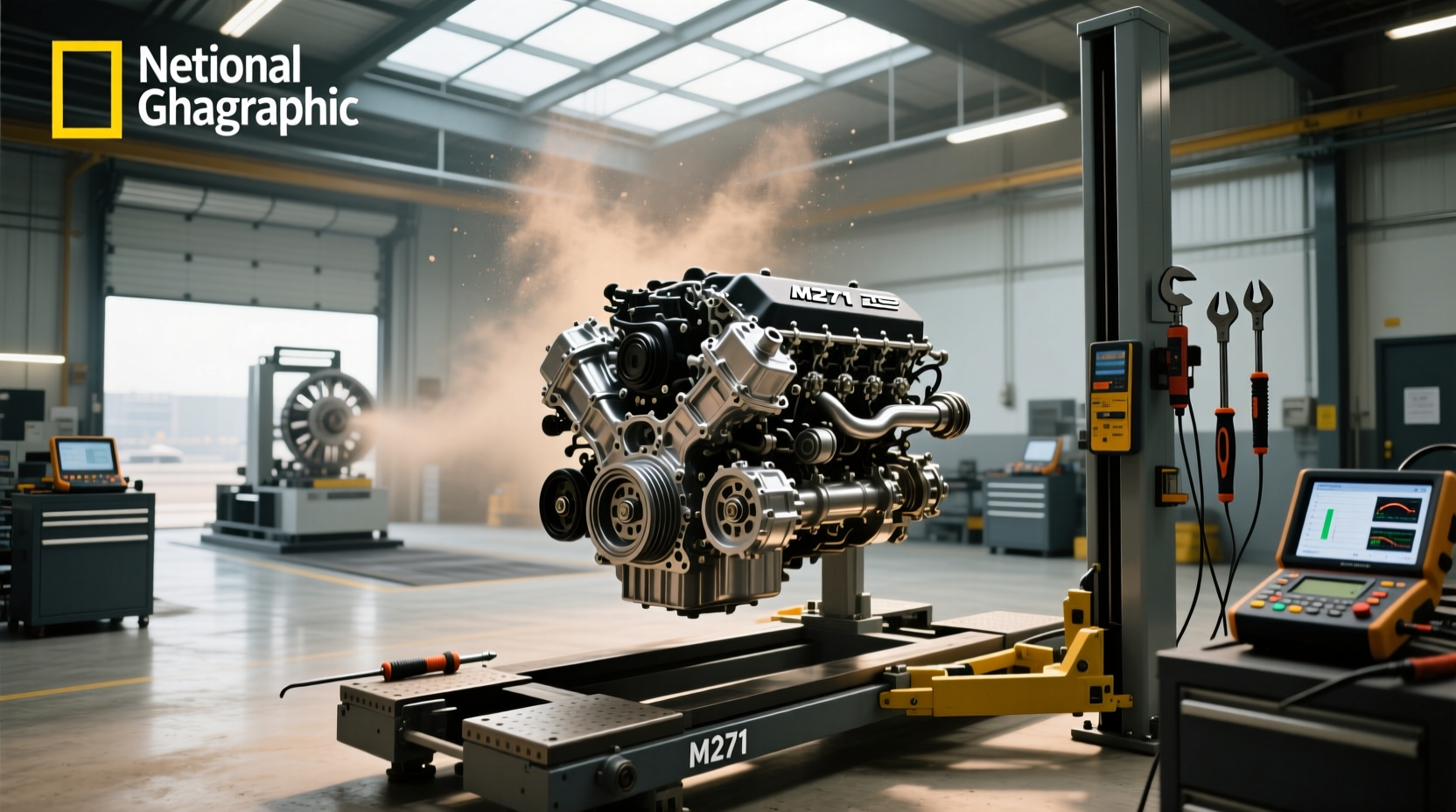
The Mercedes-Benz M271 engine, particularly the early supercharged Kompressor variants, has a mixed reputation for reliability due to widespread timing chain stretch and camshaft adjuster failures. However, later turbocharged M271 EVO models introduced from around 2008 onward show significantly improved durability when properly maintained. Understanding Mercedes M271 engine reliability concerns is essential for anyone considering a used C180, C200, C230, or SLK200/SLK250 from the mid-2000s to mid-2010s.
What Is the M271 Engine?
🏭 The Mercedes-Benz M271 is a family of inline-4 gasoline engines produced between 2002 and 2015. It was primarily used across compact and mid-size models including the W203, W204, and W212 C-Class; R170 and R172 SLK; and some Vito vans. Available in 1.6L, 1.8L, and 2.0L displacements, the M271 came in both naturally aspirated and forced-induction forms—most notably with a supercharger (Kompressor) in earlier models and direct-injection turbocharging (CGI) in later EVO versions.
⚙️ Key technical features include:
- Aluminum block and head – reduces weight and improves thermal efficiency
- DOHC, 16-valve design with variable valve timing (VVT)
- Sequential fuel injection or CGI (Stratified Charged Gasoline Injection) in later models
- Chain-driven camshafts – critical point of failure in early designs
- Power output ranging from 115 hp (1.6L NA) up to 201 hp (1.8L turbo CGI)
This engine was engineered to balance performance, fuel economy, and emissions compliance during a transitional period for European automakers facing tightening regulations. While innovative at launch, certain design choices led to long-term reliability issues that continue to affect owners today.
M271 Engine Generations: From Kompressor to CGI Turbo
Understanding the differences between M271 generations is crucial when evaluating reliability. There are three main variants:
1. Early Supercharged (Kompressor) Models (2002–2007)
⚡ These engines feature a Roots-type supercharger and were marketed under names like C230 Kompressor. They deliver strong low-end torque but suffer from several well-documented weaknesses:
- ✅ High-performance feel at low RPMs
- ❗ Prone to timing chain wear due to high load on the chain tensioner system
- ❗ Supercharger bypass valve and bearing failures after 80,000–100,000 miles
- ❗ Oil consumption and leaks from valve cover gaskets and front crank seal
These models are generally considered the least reliable within the M271 family, especially if maintenance intervals have lapsed.
2. Direct Injection (CGI) Naturally Aspirated (2006–2010)
✨ Introduced as part of Mercedes’ efficiency push, these engines use high-pressure direct fuel injection without forced induction. Examples include the C180 CGI (M271.946).
- ✅ Better fuel economy than supercharged versions
- ✅ Lower mechanical stress compared to Kompressor units
- ❗ Still susceptible to timing chain issues, though less severe
- ❗ Carbon buildup on intake valves due to lack of fuel washing effect
While more efficient, they don’t offer compelling performance gains and still carry over the core timing chain vulnerability.
3. Turbocharged CGI EVO (2008–2015)
🔧 The final evolution—often called M271 DE18LA—adds a turbocharger and revised internal components. Found in C250 and SLK250 models (e.g., W204, R172), this version addresses many prior flaws.
- ✅ Reinforced timing chain guides and updated tensioner design
- ✅ Improved oil flow and cooling management
- ✅ Higher power output (up to 201 hp) with better throttle response
- ✅ Generally more robust if serviced regularly
This EVO variant represents the most reliable form of the M271 engine, particularly when maintained with correct oils and timely inspections.
Common M271 Engine Problems
Despite engineering quality, several recurring problems plague the M271 series. Awareness of these can help buyers make informed decisions and owners prevent catastrophic failures.
📌 Timing Chain Stretch and Guide Failure
🔍 This is the single most widespread issue affecting pre-EVO M271 engines. The factory-installed plastic timing chain guides degrade over time, leading to excessive slack in the chain. Symptoms include:
- Rattling noise on cold startup (especially pronounced in morning starts)
- Check engine light with codes related to camshaft timing (P0016, P0017)
- Potential valve-to-piston contact if the chain jumps teeth
🛑 In extreme cases, this can result in bent valves or complete engine seizure. Replacement typically requires removing the engine front cover and often the entire engine from below—a labor-intensive job costing $2,000–$4,000 USD depending on location and shop rates.
Luckily, aftermarket metal-reinforced guide kits are now available, offering a permanent fix when installed correctly 1.
📌 Camshaft Adjuster (Phaser) Magnet Failure
🔧 The variable valve timing system uses magnet-equipped cam adjusters. Over time, heat and oil contamination cause the magnets to detach.
- Symptoms: Rough idle, misfires, poor acceleration, increased emissions
- Diagnosis: OBD2 scan showing camshaft position sensor discrepancies
- Fix: Replace faulty adjusters—preferably with updated OEM or reinforced aftermarket units
This issue often appears alongside timing chain problems, compounding repair costs.
📌 Oil Leaks
🧼 Common leak points include:
- Valve cover gasket (very common)
- Front crankshaft seal (linked to timing chain access)
- Oil cooler o-rings
- Rear main seal (expensive to reach)
Using incorrect oil viscosity or extended drain intervals accelerates degradation of rubber seals. Regular inspection and proactive replacement during other services can reduce long-term costs.
📌 Supercharger Failures (Kompressor Models Only)
🛒 On pre-2008 supercharged engines, the Eaton-style supercharger may fail due to worn bypass valves or bearing wear.
- Symptoms: Whining noise, loss of boost pressure, check engine light
- Repair options: Rebuild kit (~$500) or full unit replacement (~$1,500+)
- Maintenance tip: Ensure intercooler and charge pipes are clean to reduce strain
Many owners choose to remove the supercharger entirely and convert to NA operation if reliability is the priority.
📌 Carbon Buildup (CGI Engines)
🧽 Because direct-injected engines don't spray fuel through the intake ports, carbon accumulates on intake valves.
- Result: Reduced airflow, rough running, hesitation
- Solution: Periodic walnut blasting or chemical cleaning every 60,000 miles
- Prevention: Use detergent-rich fuels and consider intake additives
How Long Do M271 Engines Last?
📈 With proper care, an M271 engine can exceed 150,000 miles. Real-world reports from forums like MBWorld and Reddit show examples of engines reaching 200,000+ miles without major overhauls—especially EVO turbo models 2.
However, lifespan depends heavily on:
- Maintenance history: Full service records using OEM-specified oils (e.g., MB 229.5)
- Driving style: Frequent short trips accelerate wear; highway driving promotes longevity
- Timing of key repairs: Addressing chain noise before damage occurs saves thousands
⚠️ Neglected engines may fail before 100,000 miles, making pre-purchase inspection critical.
How to Evaluate M271 Engine Health When Buying Used
📍 If you're considering a used Mercedes with an M271 engine, follow this checklist:
1. Listen for Cold Start Rattle
⏱️ Start the car when it's fully cold (overnight). A brief metallic rattle (<5 seconds) might be normal. Any prolonged knocking or grinding suggests advanced timing chain wear.
2. Check Service Records
📋 Look for evidence of:
- Regular oil changes every 7,500–10,000 miles
- Use of Mercedes-approved 5W-40 or 0W-40 full synthetic oil
- Previous timing chain or cam adjuster work
3. Scan for Error Codes
🔗 Use an OBD2 scanner to check for stored or pending codes related to camshaft timing, misfires, or boost control.
4. Inspect for Oil Leaks
🔎 Examine the valve cover, front engine seal, and oil pan. Seepage indicates aging gaskets that will eventually need replacement.
5. Verify Model Year and Engine Type
🌐 Confirm whether it’s a Kompressor, CGI NA, or turbo EVO model. You can usually identify by badge (C230 vs C250) or VIN lookup. Turbo EVO models post-2010 are preferred for reliability.
Can You Improve M271 Engine Reliability?
✅ Yes—several preventive steps can extend life and avoid expensive repairs:
Use Correct Oil Specifications
🧼 Always use Mercedes-Benz approved motor oil meeting specification 229.5 (for older models) or 229.51/229.52 (for newer turbocharged versions). Avoid generic synthetics not certified for MB engines.
Change Oil Every 7,500 Miles
⏱️ Even if the vehicle has an AFS (Assyst Plus) system suggesting longer intervals, stick to 7,500-mile oil changes to protect the timing chain and turbocharger bearings.
Install Metal Timing Chain Guides
🔧 If the original plastic guides haven’t been replaced, budget for this upgrade. Kits from brands like Mahle or KS Kolbenschmidt provide durable solutions.
Address Small Issues Early
❗ Don’t ignore minor symptoms like slight oil seepage or faint startup rattle. Early intervention prevents cascading failures.
Consider an Engine Rebuild or Swap
🚚 For high-mileage vehicles, a professionally rebuilt long-block engine (e.g., NuTech or OEM remanufactured) may offer better value than repairing multiple failing components.
Cost of Ownership: What to Budget For
📊 Here’s a realistic estimate of potential expenses over 10 years or 100,000 miles:
| Repair/Service | Average Cost (USD) | Recommended Interval |
|---|---|---|
| Oil Change + Filter | $120–$180 | Every 7,500 miles |
| Timing Chain Replacement (with metal guides) | $2,500–$4,000 | Before 100k miles (preventive) |
| Camshaft Adjuster Replacement (x2) | $800–$1,200 | As needed (often with chain job) |
| Valve Cover Gasket Replacement | $400–$600 | Every 80k–100k miles |
| Intake Valve Cleaning (Walnut Blasting) | $300–$500 | Every 60k miles (CGI models) |
| Supercharger Rebuild (Kompressor only) | $500–$1,500 | As needed |
Over time, these costs add up—making the M271 a relatively expensive engine to maintain compared to simpler non-CGI four-cylinders.
Should You Buy a Car with an M271 Engine?
🧭 The answer depends on your goals:
- Yes, if: You’re buying a late-model (2010+) turbo EVO version with documented maintenance and no known chain issues.
- No, if: It’s a pre-2008 Kompressor model with high mileage and unclear service history.
- Maybe, if: Price reflects potential repair costs and you’re prepared to invest in preventive maintenance.
Always factor in the cost of a potential timing chain job when negotiating price. A seemingly cheap C250 could become a money pit if the chain fails shortly after purchase.
Frequently Asked Questions
- ❓ Is the M271 engine good?
- The M271 engine offers solid performance and efficiency, especially in its later turbocharged EVO form. However, early Kompressor versions have notable reliability issues, particularly with the timing chain and supercharger. With proper maintenance, the engine can be dependable, but neglect leads to expensive repairs.
- ❓ What cars use the M271 engine?
- The M271 engine was used in several Mercedes-Benz models, including the C-Class (W203, W204), E-Class (W211), SLK (R170, R172), and Vito vans, primarily from 2002 to 2015. It powered variants like the C180, C200, C230 Kompressor, C250, SLK200, and SLK250.
- ❓ What is the timing chain problem on the Mercedes M271?
- The M271 engine uses a timing chain with plastic guides that degrade over time, causing chain slack and potential misalignment. This results in rattling on startup and, if ignored, can lead to catastrophic engine damage. The issue is most common in pre-2008 Kompressor models but affects earlier CGI versions too.
- ❓ How much does it cost to replace the timing chain on an M271 engine?
- Replacing the timing chain on an M271 engine typically costs between $2,500 and $4,000 USD. The job is labor-intensive, often requiring engine removal, and should include upgraded metal guides to prevent recurrence.
- ❓ Can I improve M271 engine longevity?
- Yes. Use Mercedes-approved synthetic oil (e.g., MB 229.5), change oil every 7,500 miles, address small leaks early, and consider preventive replacement of the timing chain and cam adjusters before 100,000 miles. Upgrading to metal timing chain guides greatly enhances durability.





 浙公网安备
33010002000092号
浙公网安备
33010002000092号 浙B2-20120091-4