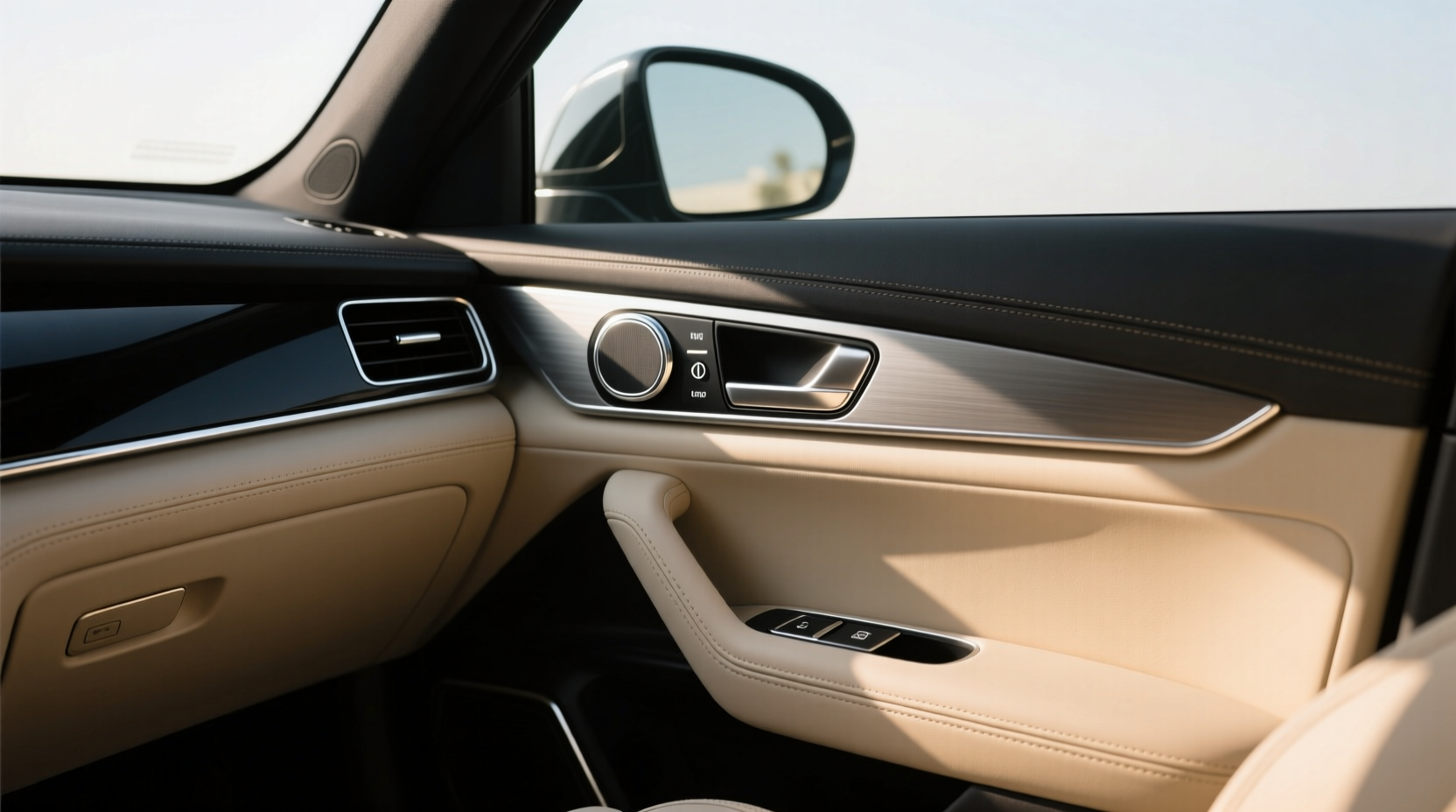
If your car's window won’t roll up or down with the press of a button, you're likely dealing with a failing power window switch for car. This small but critical component controls the electrical signal sent to the window motor, and when it fails, convenience turns into frustration. The good news? Most issues can be diagnosed at home, and replacements are often affordable and straightforward—especially if you understand how these switches work, what signs to look for, and which steps to follow for safe, effective repair.
Understanding the Role of a Power Window Switch in Your Vehicle
A power window switch is an electrical interface that allows drivers and passengers to control the raising and lowering of vehicle windows using electric motors. Found on door panels—most commonly on the driver’s side master control—the switch completes a circuit when pressed, sending voltage to the appropriate window motor. These switches vary by design: some feature individual rocker switches per window, while others integrate multiple functions into a single panel.
There are two primary types: master switches, typically located on the driver’s door, which control all windows, and individual door switches, allowing localized control. They operate on low-voltage DC (usually 12V) and rely on precise internal contacts and spring mechanisms to function reliably over thousands of cycles.
Common Signs of a Failing Power Window Switch
Before replacing any part, it's essential to confirm whether the issue lies with the switch itself or another component like the motor, fuse, or wiring. Here are the most frequent indicators of a failing power window switch for car:
- Intermittent Operation: The window works sometimes but not consistently—this often points to worn internal contacts or loose wiring connections ⚡
- No Response at All: Pressing the switch yields no sound or movement from the window motor 🔇
- Only Works in One Direction: You can lower the window but not raise it (or vice versa), suggesting a broken contact within the switch mechanism ⬆️⬇️
- Sticking or Hard-to-Press Buttons: Physical resistance may indicate debris buildup or mechanical wear inside the switch housing 🧼
- Driver-Side Failure First: Since the driver uses their switch more frequently, it tends to fail before others 👥
It’s important to rule out simpler causes first—like a blown fuse or tripped child lock—before concluding the switch is defective.
How to Test a Power Window Switch: Simple Diagnostic Methods
Diagnosing a bad switch doesn't require advanced tools. With basic equipment and safety precautions, you can test functionality effectively:
- Check the Fuse: Locate your vehicle’s fuse box (refer to the owner’s manual). Identify the fuse labeled “windows” or “accessories.” Visually inspect it or use a multimeter to verify continuity. A blown fuse will interrupt power to all switches ❗
- Listen for Motor Noise: When pressing the switch, have someone listen near the door panel. If you hear a faint hum or click, the motor is receiving power—meaning the switch might still be functional or partially working 🔍
- Swap Test (if applicable): On vehicles where passenger and driver switches are interchangeable, swap them temporarily. If the problem moves with the switch, the switch is faulty ✅
- Use a Multimeter: Set to continuity or voltage mode. Disconnect the switch and probe its terminals while activating the button. No reading indicates internal failure 📊
- Wiggle Test: Gently wiggle the wires connected to the switch while pressing the button. If the window responds intermittently, there could be a broken wire or poor connection inside the harness 🧰
These tests help isolate whether the fault lies in the switch, wiring, motor, or power supply.
Differences Between OEM and Aftermarket Power Window Switches
When replacement becomes necessary, consumers face a choice between original equipment manufacturer (OEM) parts and aftermarket alternatives. Each has trade-offs:
| Feature | OEM Switch | Aftermarket Switch |
|---|---|---|
| Fit & Finish | Precise match to factory specs | Varies by brand; some require modification|
| Price | Higher cost (often $60–$150) | Lower cost ($10–$50) |
| Reliability | Consistently durable | Mixed quality depending on supplier |
| Installation | Plug-and-play, no programming | Usually direct fit, but verify compatibility |
| Availability | Limited to dealership or authorized retailers | Widely available online and in auto stores |
While OEM switches offer guaranteed compatibility and longevity, many reputable aftermarket brands now produce reliable options that meet or exceed expectations—provided you choose carefully based on reviews and specifications.
Step-by-Step Guide: Replacing a Power Window Switch
Replacing a faulty switch is a manageable DIY task for most car owners. Below is a general procedure applicable to many sedans and SUVs. Always consult your vehicle-specific repair manual before beginning.
Tools Needed
- Trim removal tool or flathead screwdriver 🛠️
- Phillips-head screwdriver
- New power window switch (correct model verified) ✅
- Gloves (to prevent scratches) 🧤
Procedure
- Disconnect the Battery: Turn off the engine and disconnect the negative terminal of the battery to prevent short circuits ⚠️
- Remove Door Panel Screws: Unscrew visible fasteners around the armrest and door handle. Some may be hidden under plastic caps or trim pieces 🔩
- Detach the Door Panel: Insert a trim tool between the panel and door frame. Carefully pry clips loose, working around the perimeter. Avoid excessive force to prevent breaking plastic retainers 💡
- Unplug the Old Switch: Once access is gained, locate the switch wiring harness. Press the release tab and disconnect it. Then remove mounting screws or clips holding the switch in place 🔌
- Install the New Switch: Insert the new unit, secure it with screws/clips, and reconnect the harness securely 🔧
- Reassemble the Door Panel: Snap the panel back into place, ensuring all clips engage. Reinstall screws and covers 📎
- Reconnect Battery and Test: Restore power and test each window function thoroughly ✨
⏱️ Total time: Typically 20–45 minutes per switch, depending on experience and vehicle model.
Cost Considerations: What You’ll Pay to Replace a Power Window Switch
The total cost depends on several factors:
- Part Price: Aftermarket switches range from $10 to $50; OEM units can cost $60–$150, especially for luxury or imported models 🏭
- Labor Costs: If done professionally, labor averages $50–$120 per hour. Many shops charge a minimum of 0.5–1 hour even for simple jobs 💵
- Number of Switches: Replacing only the driver’s master switch is common, but full kits (e.g., 4-door sets) are available for bulk savings 📈
Doing it yourself can save $75–$150 in labor alone. However, ensure proper diagnosis first—replacing a working switch wastes money.
Wiring and Electrical Safety: Avoiding Common Mistakes
Electrical systems demand caution. Here are key safety practices:
- Always disconnect the battery before touching connectors or removing components ⚡
- Label wires if modifying—though most modern switches are plug-and-play, custom installations may require splicing 🔗
- Avoid moisture exposure during installation; water ingress leads to corrosion and premature failure 🌧️
- Don’t force connectors—misaligned pins can damage both switch and harness 🔌
- Double-check polarity if installing universal or non-OEM switches to prevent reverse current flow ❌
Improper handling can lead to permanent damage to the window motor, control module, or even trigger airbag system warnings due to shared CAN bus networks in newer cars.
Universal vs. Vehicle-Specific Switches: Which Should You Choose?
Some suppliers offer universal power window switches designed to work across multiple vehicles. While appealing due to lower prices and broad availability, they come with caveats:
- Compatibility Risks: May not fit flush or align with existing bezels
- Extra Wiring Required: Often need manual connection to power/ground/motor lines instead of plug-in harnesses
- Aesthetic Mismatch: Color, shape, or labeling may differ from original
- No Integrated Features: Lack one-touch up/down, auto-reverse, or anti-pinch logic found in modern OEM units
For reliability and ease, vehicle-specific switches are strongly recommended unless you’re retrofitting manual windows to power or building a custom hot rod.
Advanced Topics: Master Control Modules and Smart Integration
In modern vehicles, especially those from GM, Ford, and Tesla, power window systems are increasingly integrated into broader body control modules (BCMs). These allow features such as:
- One-Touch Auto-Up/Down
- Remote Operation via Key Fob
- Obstacle Detection (Anti-Pinch)
- Programmable Express Functions
Replacing a switch in such systems may require synchronization or recalibration. In some cases, the BCM must recognize the new switch through a reset sequence—often involving specific key cycling or software tools.
Recent patents suggest automakers are exploring centralized digital interfaces to replace physical buttons entirely, potentially moving window controls to touchscreens or gesture-based systems 1. While not yet mainstream, this shift underscores the growing complexity of what was once a simple mechanical switch.
When Not to Replace the Switch: Other Potential Causes
A failed switch isn’t always the culprit. Consider these alternative issues:
- Blown Fuse or Relay: Check the accessory fuse panel first—it’s the easiest fix 🔦
- Faulty Window Motor: A grinding noise or complete silence may point to motor burnout
- Regulator Mechanism Jam: Debris, ice, or misalignment can prevent smooth movement
- Water Damage: Moisture intrusion from worn seals can corrode switch contacts or wiring
- Child Lock Activation: Some models disable rear switches via a central lock setting
Always perform a full system check before purchasing a replacement switch.
Tips for Choosing the Right Replacement Switch
To avoid buying the wrong part, follow these guidelines:
- Verify Vehicle Compatibility: Use your VIN or exact year/make/model/engine to filter results 🌐
- Match Button Layout: Ensure number and position of buttons matches your door panel
- Check Connector Type: Compare photos of the plug; mismatches mean rewiring
- Read User Reviews: Look for feedback on durability, fitment, and long-term performance
- Avoid Extremely Cheap Options: Sub-$10 switches often fail within months due to brittle plastics or weak contacts
Can You Manually Roll Up a Power Window? Emergency Solutions
If your window is stuck down and weather is approaching, you may wonder: Is there a way to manually roll up a power window? In most cases, no—modern regulators are not designed for manual cranking. However, temporary fixes include:
- Jump the Motor Directly: Using jumper wires from a 12V source to the motor terminals (with switch bypassed) can raise the glass—but only if the motor and regulator are intact ⚠️
- Seal with Plastic Sheet: Tape a trash bag or tarp over the opening to keep rain out 🌧️
- Visit a Repair Shop ASAP: Many offer same-day service for common models 📍
Never attempt to force the glass up by hand—it can derail the track or break the glass.
Final Thoughts: Empowering Drivers Through Knowledge
Understanding how a power window switch for car works—and how to troubleshoot and replace it—gives drivers greater control over maintenance costs and vehicle uptime. While professional service is always an option, many failures can be resolved quickly and affordably at home with minimal tools. The key is accurate diagnosis, selecting the correct replacement, and following safe procedures.
As automotive technology evolves, so too will window control systems. But for now, the fundamental principles remain accessible to anyone willing to learn.
Frequently Asked Questions
- How do you reset a power window switch?
- On some vehicles, resetting involves turning the ignition to 'ON', holding the window switch up for 10 seconds after the window closes, then repeating in the down direction. This reinitializes the auto-reverse calibration. Consult your owner’s manual for model-specific steps.
- What is a power window switch?
- A power window switch is an electrical component that sends signals to the window motor, enabling the raising and lowering of car windows with the press of a button. It's usually located on the door panel and comes in individual or master configurations.
- Is there a way to manually roll up a power window?
- Generally, no. Modern power windows lack manual cranks. If the switch fails, the best temporary solution is to power the motor directly using jumper cables or seek professional repair immediately.
- How to tell if a power window fuse is blown?
- Check the fuse labeled 'windows' or 'accessories' in the fuse box. Remove it and inspect the metal strip inside—if it’s broken or blackened, it’s blown. Replace with a fuse of the same amperage rating.
- Can a power window switch be repaired instead of replaced?
- Sometimes. If the issue is dirt or oxidation, cleaning the contacts with electronic contact cleaner may restore function. However, internal mechanical or electrical damage usually requires full replacement.





 浙公网安备
33010002000092号
浙公网安备
33010002000092号 浙B2-20120091-4