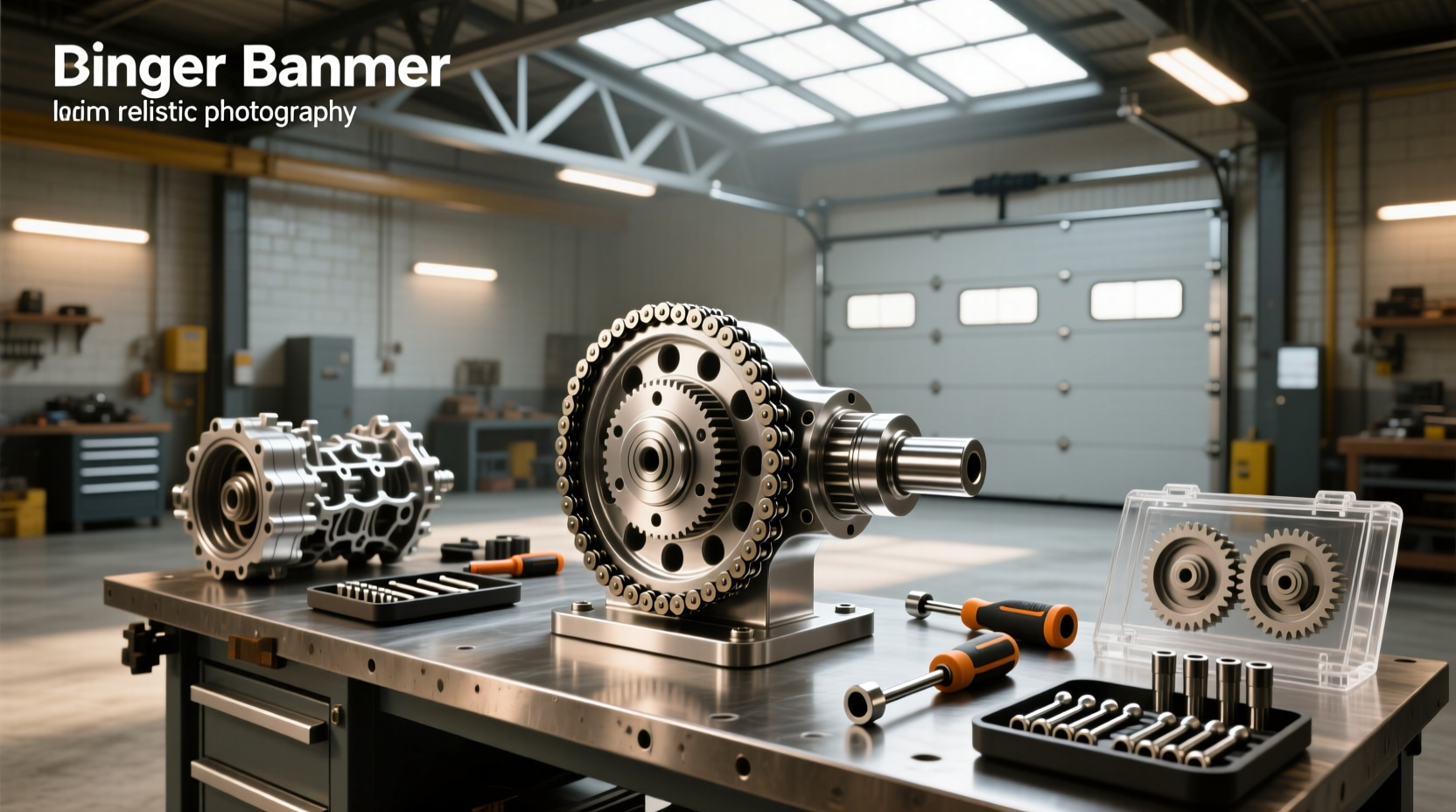
🔧 A chain driven differential kit is a mechanical assembly that delivers power from an engine to two rear wheels via a chain drive system while allowing them to rotate at different speeds during turns. Unlike traditional shaft-driven or factory OEM setups, these kits are commonly used in custom off-road vehicles, go-karts, trikes, UTVs, and DIY buggy builds where modular design and serviceability matter. If you're searching for a reliable way to convert a direct-chain setup into a fully functional independent rear drive with differential action, understanding the components, compatibility, and installation nuances of a chain driven differential kit is essential before investing time and money.
Why Use a Chain Driven Differential?
⚙️ The primary advantage of a chain driven differential lies in its simplicity and adaptability. In many small-engine vehicles—especially Chinese-made ATVs, homemade dune buggies, or racing karts—the original drivetrain may lack a true differential, relying instead on solid axles or no rear-end gearing at all. This leads to poor handling, tire scrubbing, and difficulty turning. Adding a chain driven differential kit solves this by introducing controlled torque distribution.
✅ These systems are especially popular among hobbyists building 4WD go-karts, side-by-sides, or lightweight off-road racers. They allow integration of a street bike engine, small V-twin motor, or even electric hub motors through standard roller chains and sprockets. Because they use external chain drives rather than enclosed axle shafts, maintenance access is easier, and modifications can be made without disassembling entire transaxles.
How Does a Chain Driven Differential Work?
⚙️ At its core, a chain driven differential operates like any automotive differential: it splits engine torque between two output shafts (axles), enabling one wheel to spin faster than the other when cornering. However, instead of being powered directly by a driveshaft connected to the transmission, it receives input via a sprocket mounted on the differential housing.
The process works as follows:
- Power leaves the engine through a primary sprocket.
- A roller chain connects this sprocket to a larger sprocket attached to the differential’s input shaft.
- The rotational force turns the internal ring gear, which drives the spider gears inside the differential carrier.
- From there, torque is transferred to both left and right axles.
This setup allows for smooth cornering and reduces stress on tires and driveline components. Some advanced models incorporate limited-slip mechanisms (like Quaife-style helical gears) to improve traction in loose terrain or performance driving scenarios.
Common Applications and Use Cases
📍 Chain driven differential kits are not typically found in stock production cars but thrive in niche and custom-built machines. Here are the most frequent applications:
1. Go-Karts and Mini Buggies
🛒 Many recreational go-karts start with direct-chain final drives that send equal power to both rear wheels. While simple, this causes understeer and tire wear. Upgrading to a chain driven differential kit improves maneuverability, particularly in competitive karting or trail-running modified chassis.
🔧 Kits designed for go-karts often include compact differentials with 3/4" or 1" bore sizes, compatible with common live axles and easy bolt-on sprockets. Mounting brackets and chain tensioners are usually part of complete packages sold online.
2. ATV and UTV Conversions
⚠️ It's not uncommon for budget ATVs—particularly imported models—to come without a functional differential. As noted in user discussions on forums like Reddit and ATV Forum, owners often ask: “Can I add a chain driven differential to my Chinese ATV?”1 The answer is yes—but only if frame clearance, engine alignment, and drivetrain geometry allow it.
📌 Retrofitting requires precise measurement of center distance between engine and rear axle, proper sprocket sizing, and reinforcement of mounting points. Misalignment can cause rapid chain wear or catastrophic failure.
3. Trike Builds and Custom Motorcycles
🌐 Enthusiasts converting motorcycles into three-wheeled trikes often replace the single-wheel swingarm with a full-width rear axle equipped with a differential. A chain driven differential kit enables retention of the original chain drive system while adding dual-powered wheels for stability and improved acceleration.
⚡ These builds require careful attention to gear ratios, chain angle offset, and lateral support to prevent wobbling or binding during operation.
4. Off-Road Racing and Buggy Projects
🏁 In grassroots motorsports such as desert racing or mini baja events, builders frequently source junkyard parts or aftermarket kits to create rugged, repairable drivetrains. A durable chain driven differential offers quick field servicing and compatibility with high-horsepower engines.
🛠️ For example, some builders have successfully adapted RX-7 differentials into chain-driven configurations using custom carriers and sprocket mounts.2 While technically complex, these projects demonstrate the flexibility of modular differential systems.
Types of Chain Driven Differentials
📋 Not all differentials behave the same. Understanding the type included in your kit is critical for matching performance goals.
| Type | How It Works | Best For | Limits |
|---|---|---|---|
| Open Differential | Splits torque equally; allows free speed variation between wheels | Casual riding, paved tracks, low-traction avoidance | Poor traction if one wheel loses grip |
| Limited-Slip (LSD) | Uses clutches or helical gears to bias torque to gripping wheel | Off-road, racing, uneven surfaces | Higher cost, more complex maintenance |
| Locking Differential | Forces both wheels to turn at same speed | Mud, rock crawling, extreme traction needs | Hard to steer when locked on pavement |
| Spool (Solid) | No differential action; both wheels permanently locked | Drag racing, straight-line speed | Severe tire wear, unsafe for daily use |
✨ Most available kits feature open or limited-slip designs. True locking units are rare in chain-driven formats due to actuation complexity.
Key Components in a Complete Kit
🧰 A typical chain driven differential kit includes several core parts. Always verify contents before purchase, especially when sourcing from marketplaces like eBay or AliExpress.
- Differential Housing: Contains internal gears and bearings; must match axle diameter and spline count.
- Input Sprocket: Attaches to the differential input shaft; size affects final drive ratio.
- Chain: Usually #35, #40, or #50 roller chain depending on torque load.
- Axles: May be included or sold separately; ensure length and end type (spindle vs. flange) suit your frame.
- Mounting Brackets: Secure the differential to the chassis; critical for maintaining alignment.
- Bearings & Seals: Prevent dirt ingress and reduce friction; quality varies widely by manufacturer.
- Optional: Reverse Gearbox: Integrated units exist for backward motion without reversing the engine.
❗ Be cautious of incomplete kits marketed as “full” or “complete.” Some sellers omit critical hardware like bolts, spacers, or lubricant. Read product descriptions carefully and check reviews for missing components.
Installation Challenges and Alignment Tips
⏱️ Installing a chain driven differential is not plug-and-play. Even experienced fabricators note that alignment is the biggest hurdle. As one YouTube builder put it: “The challenging part… is trying to get this sprocket to line up with the sprocket on the engine.”3
Here are practical tips to avoid common pitfalls:
1. Measure Center Distance Accurately
📏 Determine the exact distance between the engine output sprocket and the intended position of the differential input sprocket. This dictates chain length and whether adjustable sliders or tensioners are needed.
2. Ensure Parallel Sprocket Alignment
🔍 Both sprockets must lie in the exact same plane. Even 2–3 degrees of misalignment will accelerate chain wear and generate noise. Use a straight edge or laser tool to align them before tightening mounts.
3. Account for Chain Tension and Slack
🔧 Roller chains expand and contract with temperature and load. Allow 1/2" to 3/4" of vertical play when properly tensioned. Too tight increases bearing load; too loose risks derailment.
4. Reinforce Mounting Points
🏭 Lightweight frames (e.g., go-kart tubing) can flex under torque, shifting alignment mid-ride. Weld in gussets or use heavy-duty U-bolts to stabilize the differential housing.
5. Lubricate Internally and Externally
🧼 Fill the differential with appropriate gear oil (usually 75W-90 or 80W-90 GL-5). Additionally, apply chain lube regularly—preferably non-sticky wax-based types for dusty environments.
Where to Buy and Price Expectations
🛍️ Chain driven differential kits vary significantly in price based on build quality, materials, and included features.
📉 Based on current marketplace data:
- Basic open differential kits (AliExpress, Alibaba): $80 – $250
- Mid-range kits with LSD (SuperATV, Power Sports Nation): $400 – $1,300
- Premium race-grade units (Taylor Race Engineering, Quaife): $1,500 – $2,800+
🌐 Global suppliers dominate the lower end, while U.S.-based companies focus on durability and customer support. Small businesses like SuperATV offer free shipping and warranties, which can justify higher prices.
🔎 When comparing options, consider:
- Material: Cast iron vs. aluminum housings affect weight and heat dissipation.
- Gear Type: Spur vs. helical cut gears influence noise and efficiency.
- Serviceability: Can you replace bearings without pressing out gears?
- Compatibility: Will it accept industry-standard axles or require proprietary parts?
DIY vs. Pre-Built: Which Is Better?
🛠️ Some builders opt to construct their own chain driven differentials from scrap parts. Channels like “Workshop From Scratch” and “rather B welding” showcase builds using salvaged differentials, custom sprocket adapters, and fabricated mounts.4 While impressive, this approach demands machining tools, precision measurement, and deep mechanical knowledge.
✅ For most users, purchasing a pre-assembled kit saves time and reduces risk. Factory-aligned housings and tested gear sets provide reliability that DIY versions rarely match unless built by professionals.
❗ However, if you’re on a tight budget or enjoy fabrication, starting with a known-good donor differential (e.g., from a Polaris RZR or Honda ATV) can yield good results with proper planning.
Common Misconceptions and Myths
❌ Despite growing popularity, several myths persist about chain driven differential kits:
Myth 1: "Any Chain Can Handle the Torque"
Reality: High-torque engines (especially those over 20 HP) require heavy-duty #40 or #50 chains. Using undersized #35 chain leads to premature breakage.
Myth 2: "All Kits Include Reverse"
Reality: Most do not. Reverse requires either a reverse module in the transmission or a separate gearbox added to the differential. Confirm this feature explicitly before buying.
Myth 3: "Installation Takes Just a Few Hours"
Reality: First-time installs often take 8–15 hours, including mock-ups, alignment checks, and adjustments. Rushing leads to poor performance and safety risks.
Final Considerations Before Buying
📌 Before purchasing a chain driven differential kit, ask yourself:
- Does my vehicle actually need a differential? Solid axles work fine for straight-line use.
- Do I have enough space for the differential and chain loop?
- Is my engine output aligned with the rear axle plane?
- Am I prepared to modify the frame or drivetrain?
- What happens if the chain derails at speed?
✅ If you’re unsure, consult engineering diagrams, watch installation videos, or seek advice from community forums. Investing in a test fit or mock-up can prevent costly mistakes.
Frequently Asked Questions (FAQs)
Below are answers to common follow-up questions users have after researching chain driven differential kits.
Can I install a chain driven differential on a Chinese ATV?
Yes, but it’s often not cost-effective. Frame modifications, alignment issues, and weak stock components make integration difficult. Assess total labor and material costs before proceeding.
What chain size do I need for my differential kit?
It depends on engine power. Use #35 for engines under 15 HP, #40 for 15–30 HP, and #50 or larger for high-performance builds. Always match sprocket pitch to chain specification.
Do chain driven differentials require special oil?
Yes. Use automotive 75W-90 or 80W-90 GL-5 gear oil unless the manufacturer specifies otherwise. Avoid using motor oil or grease inside the housing.
Are limited-slip options available for chain driven kits?
Yes. Brands like Quaife and Taylor Race Engineering offer helical-type limited-slip differentials compatible with chain drive setups, though they come at a premium price.
How do I maintain a chain driven differential system?
Regularly check chain tension, inspect for worn teeth on sprockets, lubricate the chain every 5–10 hours of use, and change differential oil annually or per operating conditions.





 浙公网安备
33010002000092号
浙公网安备
33010002000092号 浙B2-20120091-4