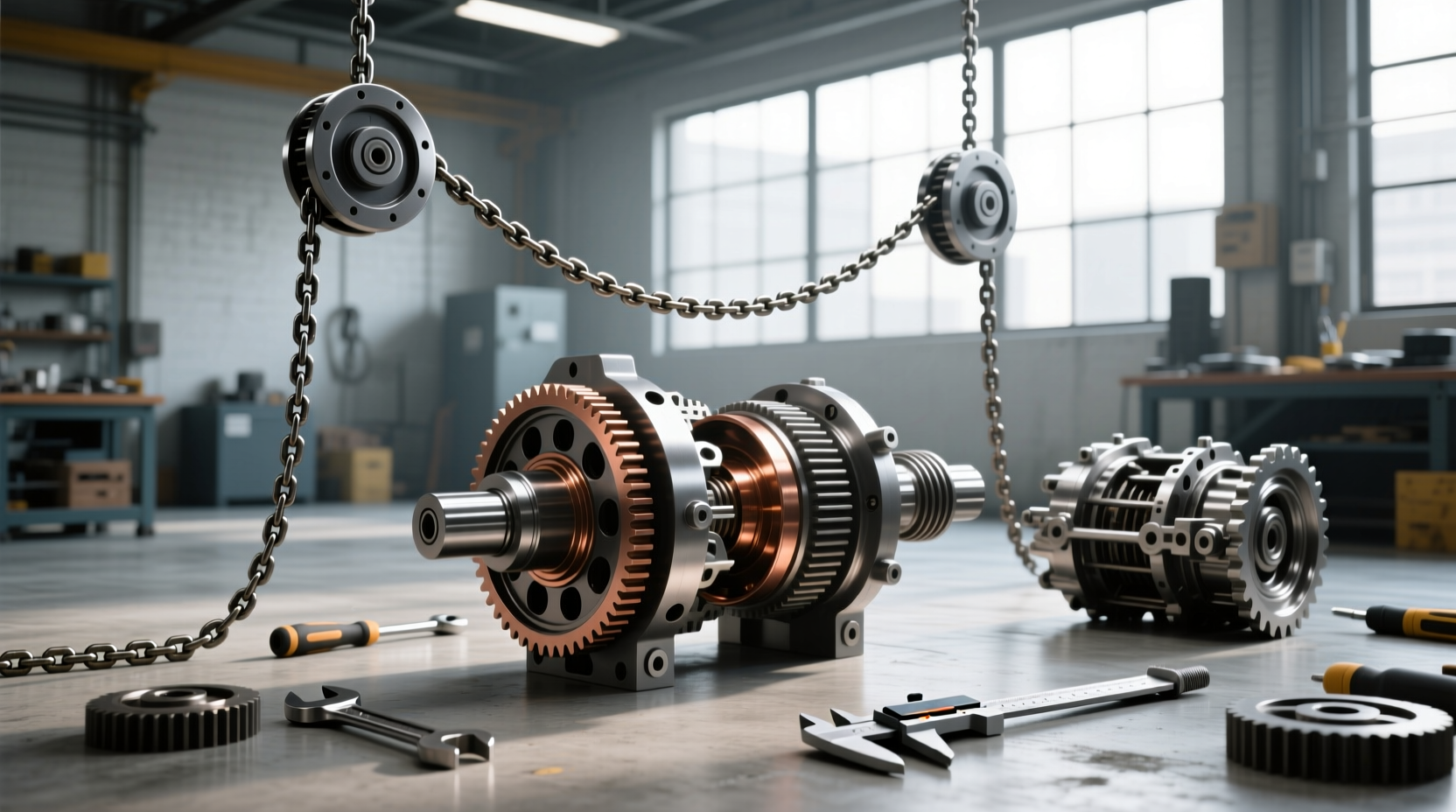
🔧 A chain drive differential kit is a mechanical solution used to transfer engine power to wheels via a sprocket and roller chain system, integrating a differential that allows for variable wheel speeds during turns. Commonly found in custom off-road vehicles, go-karts, ATVs, and specialty machinery like mini-forwarders or DIY 4x4 lawn mowers, these kits offer a balance of simplicity, serviceability, and torque-handling capability1. Unlike traditional axle shafts or CV joints, chain-driven differentials rely on external sprockets and chains, making them ideal for high-torque, low-speed applications where ground clearance and modularity matter.
This guide breaks down everything you need to know about chain drive differential kits: how they function, where they’re used, key components, advantages and limitations, compatibility considerations, and common installation challenges. Whether you're building a UTV, modifying a kart, or engineering a prototype vehicle, understanding the role and requirements of a chain drive differential will help you make informed decisions and avoid costly mistakes.
How a Chain Drive Differential Works
⚙️ At its core, a chain drive differential combines two systems: a mechanical differential gear set and an external chain drive mechanism. The differential unit—typically a limited-slip or open type—sits inside a housing and receives rotational input from the engine via a driveshaft or chain. Instead of connecting directly to axles, the output side of the differential connects to one or more sprockets mounted externally.
These sprockets then drive chains that run to the wheels (or intermediate axles), transferring torque. Because the differential allows the left and right outputs to rotate at different speeds, it prevents tire scrubbing during cornering—a critical feature for any vehicle with solid rear axles or independent chain-driven wheels.
In some configurations, such as those seen in Formula SAE projects or custom 6x6 builds, multiple sprockets are used—one per wheel—allowing each side to be driven independently through separate chains while still benefiting from differential action2.
Common Applications and Use Cases
📍 Chain drive differential kits are not standard in most production passenger vehicles but are widely used in niche and performance-oriented applications:
- All-Terrain Vehicles (ATVs): Especially in modified or utility models where durability and ease of maintenance are prioritized over refinement.
- Go-Karts and Mini-Buggies: Many high-performance karts use chain-driven differentials to manage power delivery across uneven track surfaces.
- DIY Off-Road Builds: Enthusiasts constructing homemade 4x4 platforms often retrofit automotive differentials (e.g., from Commodore or RX-7 donor cars) with chain outputs for better articulation and ground clearance.
- Specialty Equipment: Agricultural machines, mini-log skidders (like 6x6 forwarders), and industrial crawlers benefit from the robustness and modular design of chain-driven setups.
One notable example is the adaptation of a Mazda RX-7 limited-slip differential into a chain-driven setup for small-scale four-wheel-drive systems, as demonstrated in various DIY engineering videos3. These builds highlight how surplus OEM parts can be repurposed effectively when paired with proper sprocket alignment and chain tensioning mechanisms.
Key Components of a Chain Drive Differential Kit
📋 A typical chain drive differential kit includes several essential elements:
| Component | Function | Material/Common Specs |
|---|---|---|
| Differential Housing | Encloses gears and bearings; mounts to frame | Cast iron or aluminum alloy |
| Internal Gear Set | Enables speed differentiation between wheels | Steel cut gears; open or limited-slip |
| Output Shafts | Transfer motion from diff to sprockets | Harden steel; keyed or splined ends |
| Sprockets | Engage with roller chain to transmit power | Heat-treated steel; 40–60 teeth common |
| Roller Chain | Transfers torque from engine to wheels | #40, #50, or #60 ANSI standard |
| Tensioners & Guards | Maintain chain alignment and protect moving parts | Adjustable arms with rollers or idler sprockets |
When sourcing a kit, ensure all components are matched for pitch, width, and load rating. Mismatched sprockets or undersized chains can lead to rapid wear, slippage, or catastrophic failure under load.
Advantages of Chain Drive Differentials
✅ There are several compelling reasons to choose a chain drive configuration over traditional shaft or belt drives:
- High Torque Capacity: Roller chains handle higher loads than belts without slipping, making them suitable for heavy-duty applications.
- Simple Maintenance: Chains and sprockets are easy to inspect, lubricate, and replace compared to enclosed axle shafts.
- Modular Design: Allows flexible placement of the engine and differential, useful in tight or unconventional chassis layouts.
- Cost-Effective Repairs: Individual components can be replaced without overhauling the entire drivetrain.
- Ground Clearance: Eliminates lower axle lines, increasing ride height—ideal for off-road terrain.
For builders working on budget-conscious prototypes or rugged utility vehicles, these benefits often outweigh the drawbacks.
Limitations and Challenges
❗ Despite their strengths, chain drive differential systems come with trade-offs:
- Noise and Vibration: Exposed chains generate more noise than enclosed driveshafts, especially at high RPMs.
- Lubrication Requirements: Chains require regular greasing to prevent rust and wear, unlike sealed axle systems.
- Alignment Sensitivity: Misaligned sprockets cause uneven chain wear, skipping, and premature failure.
- Exposure to Debris: Without proper guarding, mud, rocks, or vegetation can jam the chain.
- Lower Efficiency Over Time: As chains stretch, efficiency drops, requiring periodic adjustment or replacement.
Additionally, achieving precise center distance between the engine sprocket and differential output is crucial. Even minor misalignments can result in binding or excessive lateral load on the chain, reducing lifespan significantly.
Installation Tips and Best Practices
🔧 Installing a chain drive differential kit successfully requires attention to detail. Here’s a step-by-step approach:
- Verify Compatibility: Confirm the differential’s input and output dimensions match your engine and wheel hubs. Check spline count, shaft diameter, and mounting bolt pattern.
- Design Proper Mounting Points: Use rigid brackets to secure the differential housing. Avoid flexing under load, which can shift sprocket alignment.
- Align Sprockets Precisely: Both front and rear sprockets must lie in the exact same plane. Use laser alignment tools or string methods to verify parallelism.
- Select Correct Chain Type: Match ANSI chain number (#40, #50, etc.) to sprocket specs. Consider using O-ring chains in dirty environments for longer life.
- Set Appropriate Tension: Allow slight sag (about 1/2 inch deflection under finger pressure) to accommodate thermal expansion and reduce bearing load.
- Install Chain Guards: Protect against debris and accidental contact, especially in pedestrian-accessible areas.
- Test Gradually: Run the system at low speed first, checking for vibration, noise, or heat buildup before full-throttle operation.
Some advanced builds incorporate jackshafts to redirect power flow or allow multiple chain runs. This adds complexity but improves layout flexibility.
Chain Drive vs. Shaft Drive vs. Belt Drive: A Practical Comparison
🔍 Understanding the differences helps determine if a chain drive differential is right for your project:
| Feature | Chain Drive | Shaft Drive | Belt Drive |
|---|---|---|---|
| Efficiency | ~95% (new), decreases with wear | ~97%, consistent | ~96%, good if aligned |
| Maintenance | Regular lubrication needed | Sealed, minimal upkeep | No lube, clean environment only |
| Durability | High (with care) | Very high | Moderate (cuts, UV degradation) |
| Noise Level | High | Low | Low to medium |
| Ground Clearance | Excellent | Poor (low-hanging shafts) | Good |
| Cost | Low to moderate | Moderate to high | Moderate |
| Ideal For | Off-road, DIY, high-torque | Production bikes, snowmobiles | Clean, smooth-power applications |
While shaft drives dominate in factory-built motorcycles and snowmobiles due to refinement, chain drives remain popular in customizable, high-performance, or rugged-use scenarios.
Where to Source Reliable Kits
🌐 Chain drive differential kits are available from various suppliers catering to industrial, agricultural, and motorsport markets. Alibaba.com hosts numerous manufacturers offering configurable units for ATVs, UTVs, and go-karts, including options with limited-slip functionality and double-disc brake assemblies4. When evaluating suppliers:
- Ask for material certifications (e.g., heat-treated steel sprockets).
- Request CAD drawings or dimensioned schematics.
- Confirm whether the kit includes bearings, seals, and fasteners.
- Look for vendors providing technical support for alignment and installation.
Avoid generic listings without clear specifications. Reputable sellers typically provide tooth count, bore size, chain pitch, and housing dimensions upfront.
Common Misconceptions About Chain Drive Systems
📌 Several myths persist around chain-driven differentials:
- Myth: They’re only for low-speed vehicles. Reality: With proper gearing and chain selection, they can operate efficiently up to 4,000+ RPM.
- Myth: All chain systems are unreliable. Reality: Well-maintained chains outlast many belt systems in harsh conditions.
- Myth: You can’t use them with suspension travel. Reality: Swingarm designs and sliding splines allow full articulation in advanced builds.
- Myth: Any sprocket fits any chain. Reality: Pitch, roller diameter, and tooth profile must match exactly.
Understanding these nuances prevents poor design choices and enhances long-term reliability.
Final Considerations Before Buying
📝 Before purchasing a chain drive differential kit, ask yourself:
- What is my vehicle’s expected torque output? Ensure the kit is rated for peak engine power.
- Will the system operate in wet or muddy conditions? If so, prioritize sealed bearings and O-ring chains.
- Do I have space for proper chain line alignment? Measure twice, cut once.
- Am I prepared for ongoing maintenance? Lubrication and inspection should be part of your routine.
- Is a limited-slip differential necessary? For traction on loose surfaces, yes; for straight-line speed, maybe not.
If your build involves significant customization, consider consulting an experienced fabricator or reviewing proven DIY case studies from forums or video tutorials.
Frequently Asked Questions (FAQs)
Below are answers to common questions about chain drive differential kits:
- Can I convert a standard axle-driven differential to a chain drive?
- Yes, but it requires machining the output shafts to accept sprockets and ensuring adequate sealing. Some enthusiasts weld sprockets onto existing axles, though this compromises serviceability.
- What chain size is best for a high-torque ATV application?
- For engines above 400cc, #50 or #60 chains are recommended. Always pair with hardened steel sprockets and maintain proper tension.
- How often should I lubricate the chain?
- Every 5–10 hours of operation in dry conditions; every 2–3 hours in mud or dust. Use a wet lube for sticky retention.
- Are chain drive differentials suitable for street-legal vehicles?
- Possibly, but they must meet local safety standards for guarding, noise, and emissions. Check regulations before public road use.
- Can I use a jackshaft with a chain drive differential?
- Absolutely. Jackshafts help reposition the chain line, enable gear reduction, and isolate engine vibration from the drivetrain.





 浙公网安备
33010002000092号
浙公网安备
33010002000092号 浙B2-20120091-4