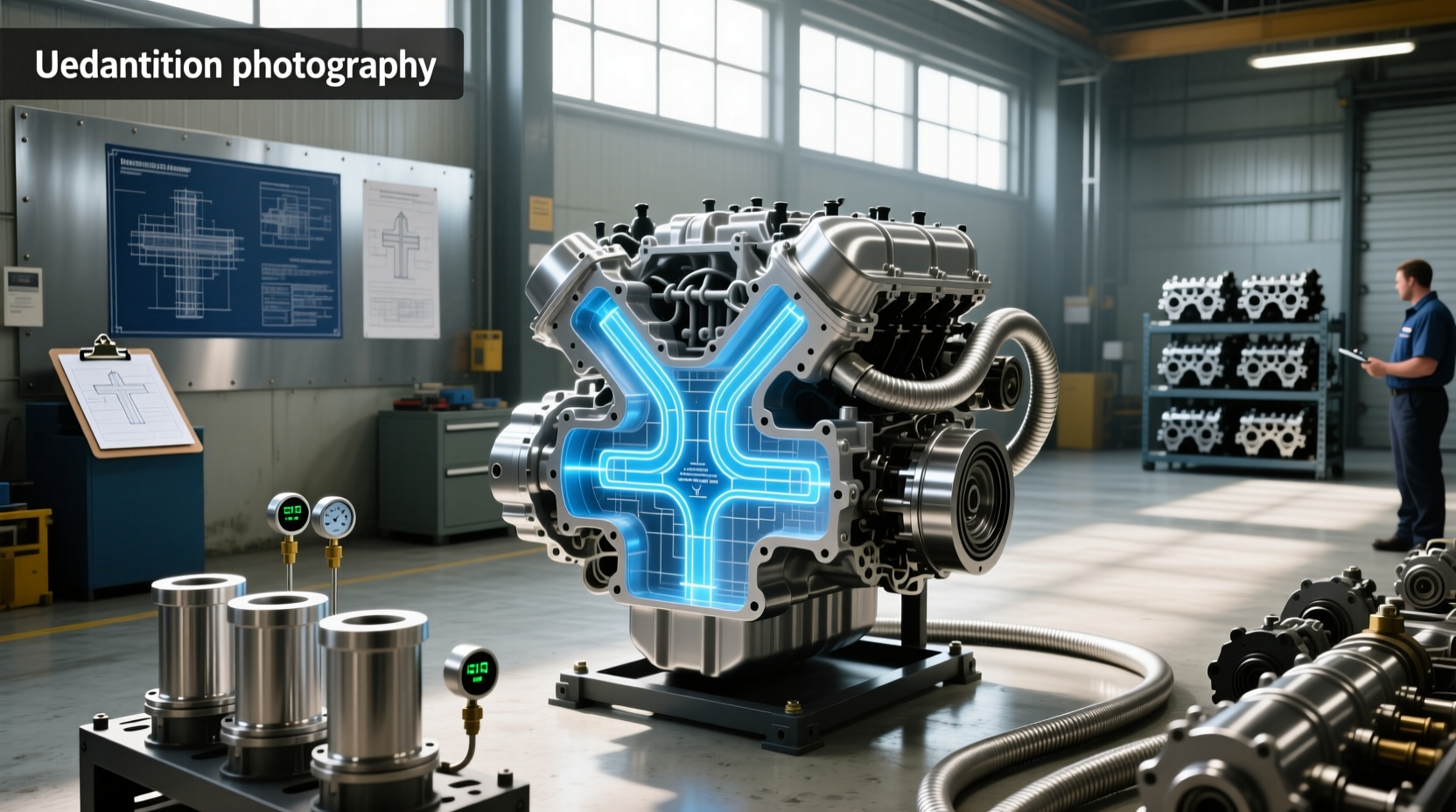
Understanding an engine water jacket diagram is essential for anyone looking to grasp how modern internal combustion engines manage heat. These diagrams visually represent the network of passages cast into the engine block and cylinder head that allow coolant to circulate around critical components like cylinders and combustion chambers ⚙️. The primary purpose? To absorb excess heat generated during combustion and transfer it to the radiator, preventing engine overheating and ensuring stable operating temperatures ✅. This cooling system—often referred to as the jacket water system—is a core part of thermal management in automotive, marine, and industrial engines 🔧.
An accurate engine water jacket diagram reveals not just the physical layout of coolant channels but also helps diagnose flow restrictions, identify potential hot spots, and support repairs or modifications. Whether you're troubleshooting a cooling issue, restoring an older engine, or designing a performance build, knowing how to read and interpret these diagrams can significantly improve your understanding of engine reliability and efficiency 🌐. In this comprehensive guide, we’ll break down everything related to engine water jackets—from structure and function to common problems and maintenance tips—all supported by insights derived from technical schematics and real-world applications.
What Is an Engine Water Jacket?
The term engine water jacket refers to a series of interconnected cavities or passages built directly into the engine block and cylinder head during manufacturing. Despite the name, these passages typically carry a mixture of water and antifreeze (coolant), not pure water. Their main role is to act as a heat exchanger by surrounding high-temperature areas such as the combustion chamber, exhaust valves, and cylinder walls with flowing coolant 💧.
During engine operation, combustion generates extreme temperatures—often exceeding 2,000°F (1,093°C)—which must be carefully managed to avoid material degradation, detonation, or catastrophic failure. The water jacket absorbs this heat through conduction and transfers it via convective cooling as the coolant moves through the system. Without this mechanism, even short-term operation would lead to rapid overheating and engine damage ❗.
These passages are usually created using sand cores during the casting process. Once the metal solidifies, the sand is removed, leaving behind hollow tunnels precisely shaped to maximize contact with hot surfaces while maintaining structural integrity of the engine casting 🏭. Modern designs use computational fluid dynamics (CFD) to optimize flow patterns and ensure uniform cooling across all cylinders.
How Does the Water Jacket Cooling System Work?
The engine water jacket doesn't operate in isolation—it's part of a larger closed-loop cooling system that includes several key components:
- Water Pump: Driven by a belt or electric motor, it circulates coolant through the engine and radiator ⚡.
- Thermostat: Regulates coolant flow based on temperature, allowing the engine to reach optimal operating range quickly 🔍.
- Radiator: Dissipates heat from the coolant into the atmosphere using fins and airflow 🌬️.
- Coolant Reservoir (Overflow Tank): Provides expansion space and allows air to escape from the system 📦.
- Hoses and Sensors: Facilitate flow and monitor temperature for engine control unit (ECU) feedback 📊.
When the engine starts cold, the thermostat remains closed, restricting coolant flow to the radiator. This enables faster warm-up, improving fuel efficiency and reducing emissions during startup. As the coolant heats up inside the water jacket, the thermostat gradually opens, allowing heated fluid to pass through the radiator where it cools before returning to the engine loop ✅.
In some heavy-duty or marine applications, a dual-circuit system may be used: one for high-temperature engine cooling and another for charge air or oil cooling. These systems often include separate water jackets or additional manifolds to manage different thermal loads independently 🚢.
Why Are Engine Water Jacket Diagrams Important?
An engine water jacket diagram serves multiple practical purposes beyond basic illustration. It acts as a blueprint for engineers, mechanics, and rebuilders who need to understand how coolant flows through the engine. Here’s why access to such diagrams matters:
Troubleshooting Cooling Issues
If an engine runs hot on one side or shows inconsistent cylinder temperatures, a diagram can reveal imbalances in coolant distribution. For example, blocked or partially restricted passages—due to scale buildup, casting flash, or debris—can create localized hot spots leading to warped heads or cracked blocks ❓.
Supporting Repairs and Rebuilds
During engine overhauls, technicians refer to water jacket diagrams when removing core plugs (also known as freeze plugs), inspecting for corrosion, or performing welding/repair work near coolant passages. Misalignment or incorrect installation of plugs can result in leaks or reduced flow efficiency 🔧.
Performance Modifications
Racers and tuners analyzing an engine water jacket diagram might modify flow paths to enhance cooling in specific zones—such as increasing coolant velocity around exhaust ports or adding bypass lines. Some aftermarket cylinder heads feature optimized water jackets designed for higher-flow radiators or electric pumps ✨.
Educational Use
For students and new mechanics, visualizing the three-dimensional maze of coolant channels helps solidify understanding of engine thermodynamics and fluid dynamics principles. Animated versions of these diagrams are increasingly used in training programs and online tutorials 📎.
| Purpose | Description | Who Benefits? |
|---|---|---|
| Troubleshooting | Identify flow restrictions, air pockets, or design flaws | Mechanics, Diagnosticians |
| Repair Guidance | Locate core plugs, gasket interfaces, and drain points | Rebuilders, Restoration Specialists |
| Design Optimization | Analyze flow balance and pressure drops | Engineers, Performance Tuners |
| Training & Education | Teach cooling system fundamentals | Instructors, Students |
Common Problems Related to Engine Water Jackets
Despite their robust design, water jackets are susceptible to various issues over time. Recognizing early signs can prevent costly engine failures.
Corrosion and Rust Buildup
In engines using improper coolant mixtures or infrequent maintenance, rust and scale can accumulate inside the water jacket. This reduces effective cross-sectional area, restricts flow, and insulates metal surfaces from efficient cooling. Aluminum engines are especially vulnerable to galvanic corrosion if incompatible coolants are used 🛠️.
Cavitation Erosion
In diesel engines, particularly those with wet-sleeve liners, cavitation—a phenomenon caused by rapid pressure changes—can erode the outer surface of cylinder liners exposed to coolant. Over time, pinhole leaks develop, allowing coolant into the crankcase or combustion chamber. Regular inspection and use of supplemental coolant additives (SCAs) help mitigate this risk 🔍.
Cracked Engine Blocks or Heads
Sudden thermal shock—like adding cold water to an overheated engine—or freezing due to lack of antifreeze can cause cracks in the block or head that intersect water jacket passages. Symptoms include white exhaust smoke (coolant burning), bubbling in the radiator, or milky oil residue. A proper diagram can assist in locating likely crack zones based on stress concentration points ✅.
Clogged Passages
Older engines or those operated with poor-quality coolant may develop mineral deposits or sludge. In severe cases, entire sections of the water jacket become blocked, leading to uneven heating and potential detonation. Flushing procedures or chemical cleaning may restore flow, but disassembly is sometimes required for full access 🧼.
How to Read an Engine Water Jacket Diagram
Interpreting a typical engine water jacket diagram requires familiarity with standard symbols and conventions. While formats vary between manufacturers, most include the following elements:
- Inlet and Outlet Ports: Marked with arrows indicating direction of coolant flow.
- Main Gallery Routes: Thick lines showing primary coolant pathways through the block and head.
- Bypass Circuits: Smaller loops that allow internal recirculation when the thermostat is closed.
- Core Plug Locations: Often shown as circular inserts along the sides of the block.
- Gasket Sealing Surfaces: Indicate where cylinder head and intake manifold seal off the coolant channels.
- Cross-Deck Cooling Features: Vertical passages linking upper and lower regions of multi-cylinder engines for balanced temps.
Some advanced diagrams include color gradients or flow velocity indicators to show temperature distribution or turbulence zones. 3D CAD renderings are now common in service manuals and engineering documentation, offering rotatable views for deeper analysis 🖥️.
Water Jacket Plugs: Function and Replacement Tips
Also known as core plugs or freeze plugs, these small metal discs seal openings left after the casting process. They’re typically made of steel or stainless steel and press-fitted into holes ranging from 1 inch to 3 inches in diameter. Contrary to popular belief, they aren’t designed to “pop out” during freezing—they’re too tightly fitted for that ⚠️.
Their real function is to provide access points for cleaning and repair. If a plug corrodes or leaks, replacement is necessary. Best practices include:
- Use silicone sealant on the rim when installing new plugs to prevent seepage.
- Replace all nearby plugs during a major teardown—even if only one is faulty.
- Consider upgrading to cup-type or expanding plugs for better durability.
- Never hammer flat disc plugs flush; they should sit slightly proud to avoid dislodging.
Differences Between Gasoline, Diesel, and Marine Engine Water Jackets
While the fundamental principle remains the same, water jacket design varies significantly depending on engine type:
Gasoline Engines
Typically feature simpler water jacket layouts with fewer reinforcement needs. Many modern designs incorporate cross-deck cooling for improved rigidity and thermal stability. Coolant flow is generally optimized for fast warm-up and emission control 🚗.
Diesel Engines
Due to higher compression ratios and peak pressures, diesel blocks require thicker walls and more extensive water jacket coverage. Wet-sleeve designs expose liner exteriors directly to coolant, requiring special attention to water quality and treatment. Cavitation-resistant coatings are often applied to liner surfaces 🏭.
Marine Engines
Boat engines face unique challenges, including exposure to saltwater and prolonged idle operation. Many use raw-water-cooled systems where seawater passes through a heat exchanger, while others rely on fully enclosed freshwater loops with dedicated water jackets. Corrosion protection is paramount, so sacrificial anodes and inhibited coolants are standard practice 🌊.
Maintenance Tips to Protect Your Engine’s Water Jacket
Preventive care goes a long way in preserving the integrity of the water jacket system:
- Use the Correct Coolant Type: Always follow manufacturer specifications regarding ethylene glycol vs. organic acid technology (OAT) formulations.
- Flush Regularly: Replace old coolant every 2–5 years depending on usage and environment.
- Avoid Tap Water: Hard water introduces minerals that promote scaling; use distilled or deionized water when mixing coolant.
- Inspect Hoses and Clamps: Leaks can introduce air into the system, causing vapor locks in the water jacket.
- Bleed Air Pockets: After servicing, run the engine with the radiator cap off to purge trapped air.
Can You Modify an Engine Water Jacket?
In performance circles, modifying water jacket flow is sometimes done to improve cooling efficiency. Common techniques include:
- Port Matching: Enlarging inlet/outlet ports at the head/block interface to reduce flow resistance.
- Blocking Off Unnecessary Passages: Used in racing to direct more coolant to critical zones.
- Installing High-Flow Water Pumps: Increases circulation rate without altering the jacket itself.
However, such modifications carry risks. Removing too much material can weaken the block, and disrupting factory flow patterns may create dead zones prone to boiling. Any alteration should be backed by thermal imaging or dyno testing to verify gains 📈.
Frequently Asked Questions (FAQ)
- What is the function of the engine water jacket?
- The engine water jacket circulates coolant around hot engine components to absorb and dissipate heat, preventing overheating and maintaining optimal operating temperature.
- How does a water jacket affect engine efficiency?
- Proper cooling ensures consistent combustion, reduces knock tendency, and maintains oil viscosity—contributing to better fuel economy and longer component life.
- What causes a water jacket leak?
- Leaks can result from corroded core plugs, cracked engine blocks, damaged gaskets, or cavitation erosion in diesel engines.
- Is a water jacket the same as a radiator?
- No. The water jacket is inside the engine block and head; the radiator is an external heat exchanger that cools the circulating coolant.
- Where can I find an engine water jacket diagram for my vehicle?
- Factory service manuals, OEM technical portals, and engineering databases like saVRee often provide detailed diagrams. Some manufacturers release cutaway illustrations in public documentation 1.





 浙公网安备
33010002000092号
浙公网安备
33010002000092号 浙B2-20120091-4