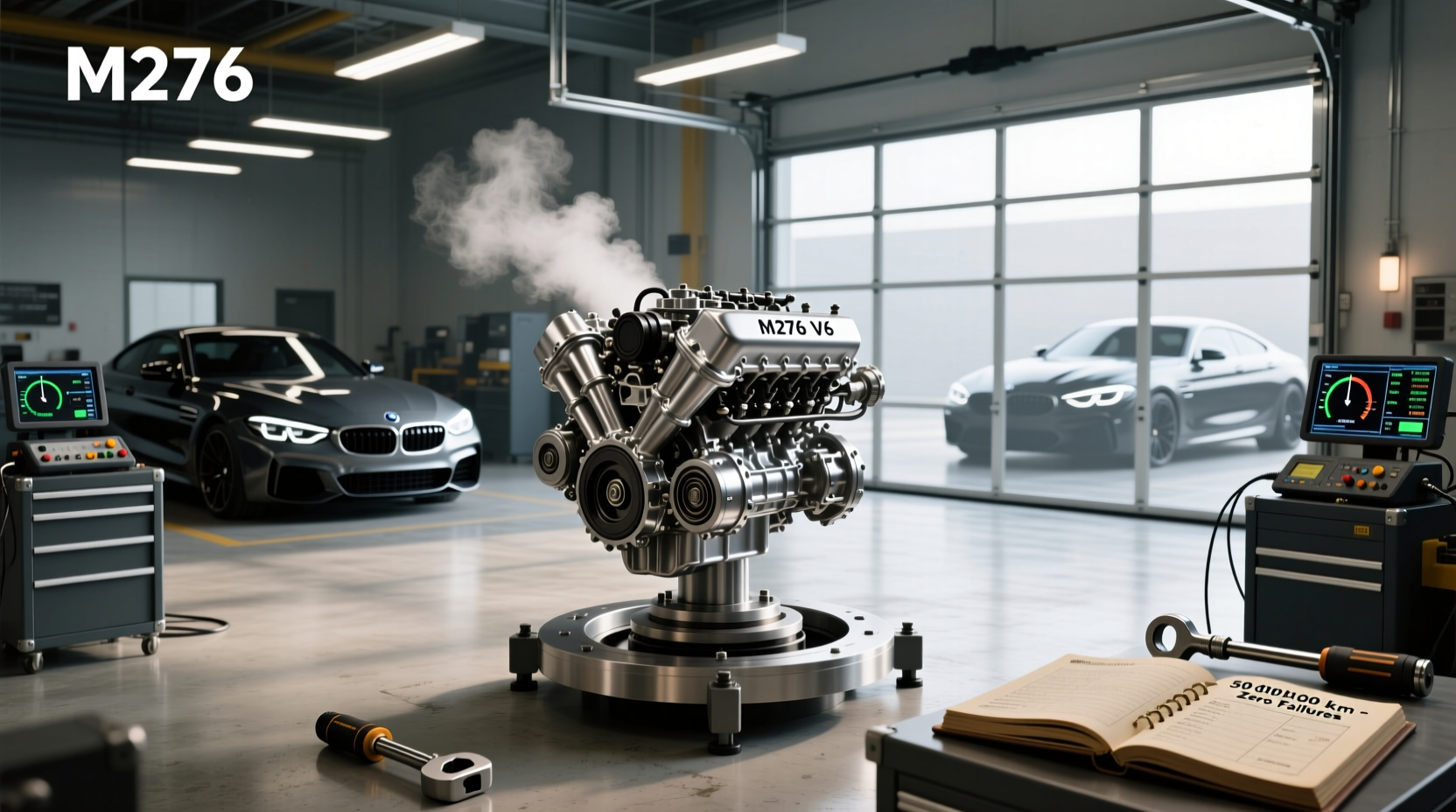
The Mercedes-Benz M276 engine is generally considered reliable when properly maintained, but it is not without known mechanical weaknesses. Mercedes M276 engine reliability largely depends on consistent service intervals, timely replacement of high-failure components, and awareness of design flaws in certain model years. While many owners report over 150,000 miles with no major issues, others have experienced premature timing chain wear, camshaft adjuster failure, and carbon buildup due to direct injection — problems that can lead to expensive repairs if ignored. This guide breaks down real-world performance, failure patterns, and preventive steps based on technical data and owner feedback.
Overview of the M276 Engine
Introduced in 2010, the M276 is a 3.0L and 3.5L naturally aspirated V6 gasoline engine used across multiple Mercedes-Benz platforms including the C-Class (W204/W205), E-Class (W212/W213), S-Class (W221/W222), and GLK/GLC SUVs 1. It replaced the older M272 and features advanced engineering such as an aluminum block, Nanoslide cylinder coating for reduced friction, dual overhead camshafts (DOHC), and independent variable valve timing (VVT) on both intake and exhaust camshafts.
⚙️ The M276 was designed during a period when Daimler AG still had ties to Chrysler, though it shares no internal components with the Pentastar V6 despite both using a 60-degree bank angle. Available in DE30 and DE35 variants, the engine powers non-turbo models like the C300, E350, and S350, delivering smooth power delivery and strong mid-range torque. However, its complexity introduces several potential points of failure that owners must understand to preserve long-term reliability.
Common M276 Engine Problems
Despite solid build quality, several recurring issues affect the M276’s reputation for durability. These are not universal but appear frequently enough in forums, repair logs, and technical service bulletins to warrant attention from current or prospective owners.
🔧 Timing Chain and Camshaft Adjusters
One of the most serious concerns involves the timing chain system. Unlike older designs with metal tensioners, some M276 engines use plastic guides and hydraulic tensioners prone to wear. Over time, these components degrade, leading to slack in the chain, misalignment of camshafts, and potentially catastrophic valve-to-piston contact.
📌 Symptoms include:
- Rattling noise at cold start (especially pronounced)
- Check engine light with codes related to camshaft timing (P0016, P0017)
- Rough idle or misfires
🛠️ The root cause often lies in delayed oil changes or poor oil flow to the upper valvetrain. Additionally, the camshaft adjusters (also called phasers) contain internal vanes that can stick or fail, disrupting precise valve timing. Replacement of both left and right adjusters, along with updated tensioners and guides, is typically recommended once symptoms appear or preemptively around 80,000–100,000 miles.
🧼 Carbon Buildup on Intake Valves
Because the M276 uses gasoline direct injection (GDI), fuel does not pass over the back of the intake valves, which traditionally helps keep them clean. Without this cleaning effect, oil vapors and combustion byproducts accumulate, forming carbon deposits that restrict airflow and reduce engine efficiency.
✅ This issue becomes noticeable after 60,000+ miles and may result in:
- Reduced throttle response
- Increased fuel consumption
- Hard starts or stalling at idle
🧰 Prevention includes regular use of intake manifold cleaners or periodic walnut blasting services every 20,000–25,000 miles, especially if short-trip driving dominates your routine 2. Some aftermarket solutions involve installing a secondary port injection kit, though this adds cost and complexity.
🔌 Ignition Coil Failures
Ignition coils are another weak point. Each cylinder has its own coil pack mounted directly above the spark plug. As these age, insulation breaks down, leading to arcing, misfires, and rough running.
🔍 Early signs include intermittent misfire codes (e.g., P0300–P0306), flashing check engine lights, and vibration under load. Replacing all six coils as a set is usually more cost-effective than addressing them one by one, particularly once one has failed.
🌡️ Coolant System Leaks
The thermostat housing, water pump, and coolant fittings are made partially from plastic or composite materials. Over time, thermal cycling causes cracking, resulting in coolant leaks.
📍 Common leak locations:
- Water pump weep hole
- Thermostat housing gasket
- Hoses connecting to heater core
⚠️ Left unchecked, low coolant levels can lead to overheating and internal damage. A proactive approach includes replacing the thermostat and water pump every 90,000–100,000 miles, even if no leak is present.
M276 Reliability by Model Year and Platform
Not all M276 engines are identical. Variants evolved over time, and integration into different chassis affects longevity.
| Model Year Range | Platform | Key Notes |
|---|---|---|
| 2011–2014 | W204 C-Class, W212 E-Class | Higher incidence of early cam adjuster failure; pre-update tensioners |
| 2015–2017 | W205 C-Class, W213 E-Class | Improved tensioner design; better oil control; fewer reports of chain issues |
| 2013–2015 | W166 ML/GL-Class | Prone to carbon buildup due to frequent stop-and-go driving patterns |
| 2014–2017 | W222 S-Class | Better cooling management; higher build standards; strongest reliability record |
👥 Owners of earlier models should be especially vigilant about timing system health. Later versions benefit from revised parts and improved manufacturing processes, making them less likely to suffer sudden failures.
How to Maximize M276 Engine Longevity
Preventive maintenance is the single biggest factor influencing M276 DE35 engine reliability. Following factory-recommended service schedules is essential, but going beyond basics can significantly extend engine life.
⏱️ Oil Change Intervals Matter
Mercedes recommends oil changes every 10,000 miles under normal conditions, but many mechanics suggest shortening this to 5,000–7,500 miles, especially in urban environments or extreme temperatures. Using OEM-specified full synthetic oil (such as MB 229.51) ensures proper lubrication for sensitive components like VVT actuators and turbocharger bearings (in turbocharged variants).
❗ Skipping or extending oil changes increases sludge formation and reduces oil pressure to critical areas, accelerating wear on timing chains and cam adjusters.
🔍 Regular Diagnostics and Scans
Using an OBD2 scanner every few months allows early detection of developing issues. Monitoring live data for camshaft position deviation or oil pressure fluctuations can reveal problems before they trigger warning lights.
📱 Affordable Bluetooth scan tools paired with apps like Torque Pro or Car Scanner ELM327 give access to advanced diagnostics without visiting a dealer.
🧽 Fuel System Maintenance
Due to GDI-related carbon buildup, consider adding a reputable fuel injector cleaner (e.g., Chevron Techron, Liqui Moly Jectron) every 5,000 miles. For deeper cleaning, professional induction service every 20,000 miles removes stubborn deposits.
🚛 Driving Habits Influence Wear
Frequent short trips prevent the engine from reaching optimal operating temperature, increasing moisture accumulation and acid formation in the oil. Allowing the vehicle to warm up fully before heavy acceleration also reduces stress on cold components.
When to Worry: Warning Signs of Impending Failure
Catching problems early prevents engine destruction. Be alert for:
- ⏱️ Persistent ticking or rattling on cold startup that doesn’t disappear after 10–15 seconds
- ⚡ Loss of power or hesitation during acceleration
- 🌡️ Rising coolant temperature gauge or recurring low coolant warnings
- 🔌 Misfire codes returning after coil replacement
- 📋 Dashboard showing “Engine Malfunction Reduced Power” message
If any of these occur, seek immediate inspection. Delaying repairs risks complete engine seizure or bent valves.
Repair Costs: What to Expect
Addressing M276 issues varies widely in cost depending on scope and labor rates.
| Repair Type | Average Cost (USD) | Labor Complexity |
|---|---|---|
| Ignition Coil Replacement (set of 6) | $400–$700 | Low |
| Camshaft Adjuster + Tensioner Kit | $1,800–$3,000 | High (requires partial disassembly) |
| Timing Chain Full Replacement | $3,500–$5,000 | Very High (engine front cover removal) |
| Walnut Blasting (Carbon Removal) | $800–$1,200 | Moderate |
| Water Pump + Thermostat Replacement | $900–$1,400 | Moderate |
🛒 Independent specialists typically charge less than dealerships, but ensure they have specific experience with M276 engines. Using updated OEM parts (not generic replacements) improves long-term outcomes.
Used Car Buyers: Should You Avoid the M276?
No — but you should inspect carefully. A well-maintained M276-powered Mercedes offers refined performance and adequate reliability for daily driving.
📌 Key checks before purchase:
- Service history showing regular oil changes and coolant flushes
- No recorded camshaft timing codes in recent scans
- No visible coolant leaks around pump or thermostat housing
- Smooth idle with no misfires or unusual noises
- Verification of prior timing system work (if performed, ask for receipts)
📍 Consider a pre-purchase inspection by a trusted independent mechanic familiar with German vehicles. Budget $150–$250 for a thorough evaluation, which could save thousands later.
Comparison to Other Mercedes Engines
While the M276 has its flaws, it compares favorably to other inline-six and V6 engines in the lineup.
- M274 (2.0L Turbo I4): More prone to turbo failures and oil consumption, but generally simpler and cheaper to fix.
- M272 (Previous V6): Known for severe timing chain issues; M276 is a significant improvement.
- M278 (Twin-Turbo V8): Powerful but complex and expensive to maintain; higher risk of intercooler and supercharger issues.
- M256 (Newer Inline-6 Turbo): Combines electric boost with robust construction; currently regarded as one of the most reliable modern AMG engines.
📊 In terms of balance between performance, refinement, and repair frequency, the M276 sits in the middle — not the best, not the worst.
Conclusion: Is the M276 a Good Engine?
Yes, the M276 can be a dependable engine if maintained properly. Its main vulnerabilities — timing chain components, carbon buildup, and ignition coils — are predictable and manageable with proactive care. There is no evidence of widespread structural defects, and many examples exceed 150,000 miles without major intervention.
The key takeaway is this: M276 engine reliability hinges on maintenance discipline. If you're willing to stay ahead of known wear items and invest in preventative servicing, the M276 remains a viable choice in the used luxury market.
Frequently Asked Questions
- ❓ Is the Mercedes M276 engine reliable long-term?
- Yes, provided it receives regular maintenance. Many reach 150,000+ miles without major issues if timing components and oil changes are managed proactively.
- ❓ Which Mercedes models have the M276 engine?
- The M276 was used in the C300/C350 (W204/W205), E350 (W212/W213), S350 (W221/W222), GLK350 (X166), and ML350/GLC350 (W166/X253) from 2011 to 2017.
- ❓ Does the M276 engine have a turbocharger?
- No, the standard M276 is naturally aspirated. However, a turbocharged version (M276 DETLA) exists in some AMG models and later hybrids, but it's mechanically distinct.
- ❓ How much does it cost to fix M276 timing chain issues?
- Full repair ranges from $3,500 to $5,000 depending on labor rates and whether additional components (like adjusters) are replaced.
- ❓ Can carbon buildup be prevented on the M276?
- Yes, through regular use of fuel additives and periodic professional intake cleaning every 20,000–25,000 miles.





 浙公网安备
33010002000092号
浙公网安备
33010002000092号 浙B2-20120091-4