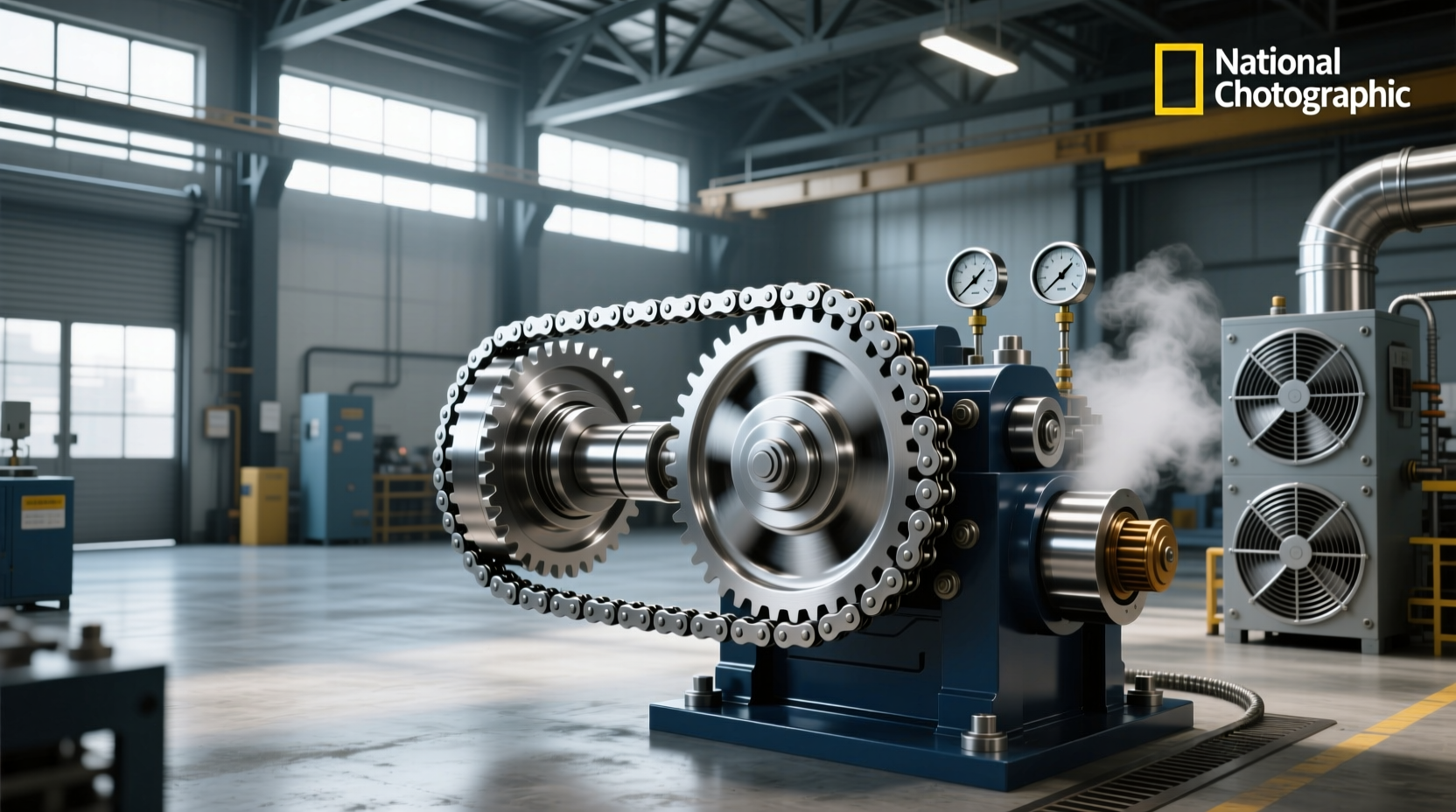
⚙️ A chain drive transmission is a mechanical power transfer system that uses a roller chain and sprockets to transmit torque from a power source—like an engine or motor—to a driven component, such as wheels or industrial machinery. This type of transmission is widely used in motorcycles, bicycles, go-karts, agricultural equipment, and conveyor systems due to its durability, efficiency, and ability to handle high-torque loads over moderate distances.
Unlike belt or gear drives, chain drives offer a positive engagement between the driving and driven sprockets, minimizing slippage and ensuring consistent power delivery. They are especially favored in applications where precise timing isn’t critical but reliability under load is essential. In this comprehensive guide, we’ll explore how chain drive transmissions function, compare them with other drivetrain types, examine real-world use cases, discuss common failure points, and provide actionable maintenance strategies—all to help you make informed decisions whether you're building, repairing, or upgrading a vehicle or machine.
How Chain Drive Transmissions Work
A chain drive transmission operates on a simple yet effective principle: rotational force (torque) generated by a motor or engine is transferred via a metal roller chain that meshes with two or more toothed sprockets. One sprocket is attached to the input shaft (driving sprocket), while another is connected to the output shaft (driven sprocket). As the driving sprocket rotates, it pulls the chain, which in turn rotates the driven sprocket, transmitting mechanical energy across a distance.
The most common configuration involves a single continuous loop of chain connecting two sprockets. However, some systems—particularly in heavy-duty or performance applications—use dual chain setups to distribute load and increase strength1. The ratio between the number of teeth on the driving and driven sprockets determines the gear reduction or multiplication, allowing engineers to tailor speed and torque characteristics for specific needs.
🔧 For example, a smaller driving sprocket paired with a larger driven sprocket increases torque at the expense of rotational speed—a setup often seen in off-road vehicles and industrial conveyors. Conversely, a larger driving sprocket with a smaller driven one favors higher speeds, typical in racing karts or high-RPM machinery.
Key Components of a Chain Drive System
To understand how to maintain or troubleshoot a chain drive transmission, it’s important to recognize its core components:
- Roller Chain: Made of interconnected inner and outer plates, pins, bushings, and rollers, this is the central element that transmits power. Chains come in various pitches (distance between pins) and strengths depending on application.
- Sprockets: Toothed wheels that engage with the chain. Sprocket design must match the chain pitch exactly to prevent wear and skipping.
- Tensioners & Idler Sprockets: Used to maintain proper chain tension and alignment, especially in long-span or variable-load systems. \li> Lubrication System: Essential for reducing friction and preventing corrosion. Some chains are sealed (e.g., O-ring or X-ring chains), while others require regular external lubrication.
- Mounting Hardware & Guards: Supports structural integrity and protects against debris, accidental contact, and environmental exposure.
⚙️ Misalignment, improper tension, or lack of lubrication are among the top causes of premature chain failure. Even minor deviations can lead to accelerated wear, noise, vibration, and ultimately, breakdowns.
Advantages of Chain Drive Transmissions
Chain drives offer several benefits that make them ideal for many mechanical systems:
✅ High Efficiency: Typically 95–98% efficient in power transmission, outperforming belt drives, especially under heavy loads.✅ No Slippage: Positive engagement ensures reliable torque transfer without loss due to slipping, unlike V-belts.
✅ Durability Under Load: Capable of handling high-torque applications, making them suitable for motorcycles, ATVs, and industrial machines.
✅ Flexibility in Design: Can operate over longer center distances than gear trains and accommodate multiple shafts using intermediate sprockets.
✅ Cost-Effective Maintenance: Individual components like chains and sprockets are replaceable, avoiding full system overhauls.
✅ Heat Resistance: Metal construction allows operation in high-temperature environments where rubber belts would degrade.
🛒 These advantages explain why chain drive systems remain popular in both consumer and industrial markets—from DIY electric bike conversions to large-scale manufacturing lines.
Disadvantages and Limitations
Despite their strengths, chain drive transmissions have notable drawbacks:
❗ Noisy Operation: Chains generate more noise than belts or enclosed gearboxes, particularly when worn or poorly lubricated.❗ Maintenance Demands: Require regular cleaning, tension adjustment, and lubrication to perform optimally.
❗ Wear Over Time: Chains stretch (due to pin and bushing wear), altering effective length and potentially causing misalignment or skipping.
❗ Vulnerability to Contamination: Dirt, moisture, and grit accelerate wear if not properly managed.
❗ Less Suitable for Precision Timing: Not ideal for applications requiring exact synchronization, such as camshafts in engines (where timing belts or chains with tight tolerances are preferred).
📍 While modern O-ring chains reduce maintenance frequency, they still require inspection and eventual replacement. In dirty environments—like construction sites or agricultural fields—protective guards and frequent servicing become critical.
Chain Drive vs. Belt Drive vs. Gear Drive
Understanding the differences helps determine the best choice for your application:
| Feature | Chain Drive | Belt Drive | Gear Drive |
|---|---|---|---|
| Efficiency | 95–98% | 90–96% | 97–99% |
| Noise Level | Moderate to High | Low | Low to Moderate |
| Maintenance | Regular Lubrication Needed | Minimal | Enclosed Units Low-Maintenance |
| Load Capacity | High | Moderate | Very High |
| Center Distance Flexibility | Good | Excellent | Poor (Fixed) |
| Slippage Risk | None (Positive Engagement) | Yes (Under Overload) | None |
| Cost | Moderate | Low to Moderate | High |
⚡ In summary: choose chain drives for robust, high-torque applications; belts for quiet, low-maintenance setups; and gears for compact, high-efficiency, precision systems.
Common Applications of Chain Drive Transmissions
Chain drives are found in a wide range of vehicles and machinery:
- Motorcycles: Most motorcycles use chain final drives due to their simplicity, adjustability, and performance. Harley-Davidson, despite historical use of belt and shaft drives, offers chain-driven models for sport and custom builds2.
- Bicycles: From road bikes to e-bikes, chain drives dominate human-powered and assisted cycling.
- Go-Karts & Mini Bikes: Small gas or electric motors often connect to rear axles via chain drives for easy assembly and tuning.
- Conveyor Systems: Industrial chains move products through production lines, packaging stations, and warehouses.
- Agricultural Equipment: Tractors, harvesters, and tillers rely on chains for PTO (Power Take-Off) systems and auger drives.
- E-Bike Conversions: Aftermarket kits frequently use chain drives to integrate motors into existing drivetrains.
🏭 In each case, the decision hinges on factors like space constraints, required torque, operating environment, and expected lifespan.
Installation Best Practices
Proper installation significantly extends the life of a chain drive transmission:
📋 Alignment: Ensure both sprockets are perfectly parallel and in the same plane. Use laser tools or straight edges for accuracy.🔧 Tension: Follow manufacturer specifications. Too loose causes slippage and whipping; too tight increases bearing load and wear.
🧼 Cleaning: Remove dirt and old lubricant before installing a new chain.
🔗 Chain Length: Cut to correct length—typically determined by counting links or measuring pitch.
✨ Lubrication: Apply appropriate lubricant after installation and re-lubricate based on usage and conditions.
⏱️ Always refer to OEM guidelines when replacing parts. Mixing incompatible components (e.g., mismatched pitch or sprocket profiles) leads to rapid deterioration.
Maintenance Tips for Longevity
Preventive care keeps chain drive systems running smoothly:
- Inspect Weekly: Look for signs of elongation, cracked side plates, stiff joints, or missing rollers.
- Check Tension Monthly: Use a tension gauge or deflection test (typically 1/2 inch of play mid-span).
- Lubricate Regularly: Frequency depends on environment—daily in dusty areas, monthly in clean indoor settings.
- Monitor Sprocket Wear: Worn sprockets have hooked or pointed teeth and should be replaced alongside the chain.
- Replace in Sets: Install new chains and sprockets together to avoid accelerated wear from mismatched components.
🚚 For mobile equipment like motorcycles or farm machinery, include chain inspection in routine service schedules. Skipping maintenance can result in sudden failures during operation, leading to downtime or safety hazards.
Troubleshooting Common Issues
Familiarity with symptoms helps diagnose problems early:
📌 Chain Skipping: Caused by worn sprockets, excessive stretch, or poor tension. Check wear indicators and replace components as needed.📌 Excessive Noise: Often due to dry chains, misalignment, or damaged rollers. Clean and lubricate first, then verify alignment.
📌 Vibration: May indicate imbalance, bent sprockets, or uneven wear. Inspect all rotating parts.
📌 Difficulty Shifting (in multi-speed systems): Linked to derailleur issues or chain stiffness—not always a transmission fault.
📌 Rapid Wear: Could stem from contamination, overloading, or incorrect lubricant type.
🔍 If problems persist after basic checks, consider professional diagnostics or consulting technical manuals.
Emerging Trends and Innovations
Modern engineering continues to improve chain drive performance:
- Sealed Roller Chains: O-ring and X-ring chains retain internal lubrication, reducing maintenance intervals.
- Surface Treatments: Nitriding, coatings, and hardened pins enhance wear resistance.
- Smart Monitoring: Sensors detect chain tension, temperature, and wear in industrial systems, enabling predictive maintenance.
- Hybrid Drivetrains: In e-bikes and scooters, chain drives integrate with electric motors and torque sensors for seamless assistance.
🌐 As automation grows, demand for durable, adaptable power transmission solutions ensures chain drives will remain relevant—even as alternatives evolve.
Frequently Asked Questions (FAQs)
What is a chain drive transmission?
A chain drive transmission transfers mechanical power using a roller chain and sprockets. It's commonly used in motorcycles, bicycles, and industrial machines to deliver torque efficiently with minimal slippage.
Why are some Harleys not chain driven?
Harley-Davidson uses belt and shaft drives on certain models for reduced maintenance, cleaner appearance, and quieter operation. Chain drives are reserved for performance-oriented or customizable models.
What are the disadvantages of chain drive?
Chain drives require regular lubrication, can be noisy, are sensitive to dirt and misalignment, and wear over time, leading to elongation and potential skipping if not maintained.
Can I convert a belt drive to a chain drive?
Yes, but it requires compatible mounting points, proper sprocket alignment, and adjustments to tensioning mechanisms. Conversion kits exist for motorcycles and e-bikes, but professional installation is recommended.
How often should I lubricate a chain drive transmission?
Lubricate every 300–500 miles for motorcycles or monthly for stationary equipment. More frequent service is needed in wet or dusty conditions.





 浙公网安备
33010002000092号
浙公网安备
33010002000092号 浙B2-20120091-4